Originally posted on Quora by Steve Gunnis
|
The best way to visualise the 4th dimension, time, is to work your way up from 1 dimension, and see how the next dimension up presents itself in that one. But we're not going to start at the bottom, we're going to start here, at the third dimension, as we live in a 3D spatial world. Imagine a ball, a nice shiny red ball, in front of you. 
In a 2 dimensional (2D) world, you can't see this whole ball. In fact, this is what we see as our retinas are 2D surfaces. We have two eyes which give us depth perception and our brains infer shapes from information such as the curved reflection on the ball's surface, but we are seeing the world in 2 dimensions. So a 2D representation of this ball is a solid red circle, a slice of the ball, the slices getting bigger as you move through the ball until the middle, and then smaller again until it disappears from your 2D world as you pass through. 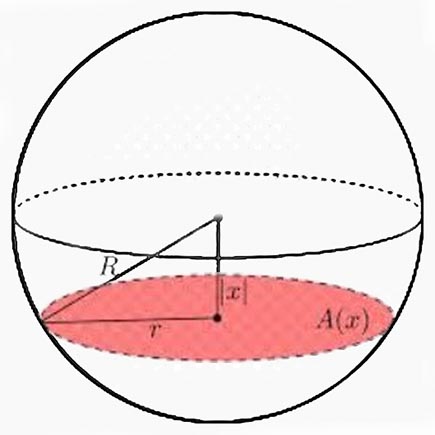
In a 1 dimensional (1D) world you can't see this whole slice, this circle. This is harder to visualise as we see a 3D world in 2D, but imagine starting at one edge of the circle and moving through it down the centreline. 
It would first appear as a red point, quickly expanding into a red line that grows in width as you move along your single axis of movement, as you pass through the middle of the circle the line starts shrinking in width again until it disappears from your 1D world as you pass through. As you have seen, when we move down a dimension, we lose some information about the higher-dimensional world. As we drop down from 3D to 2D we lose the depth of the ball, we could only see slices of it expressed on a flat plane. When we drop down to 1D we lose the length of the slice, we can only see slices of the circle running left or right, which appear as straight lines. Now we need to pop back to our higher dimensional reality, our 3D spatial world. But it is not a 3D world, it is a 4D world, and this fourth dimension is time. So what information have we lost about the ball as we view it in a 3D world? If it's hard to visualise then let's make it much easier, let's throw the ball across the room. 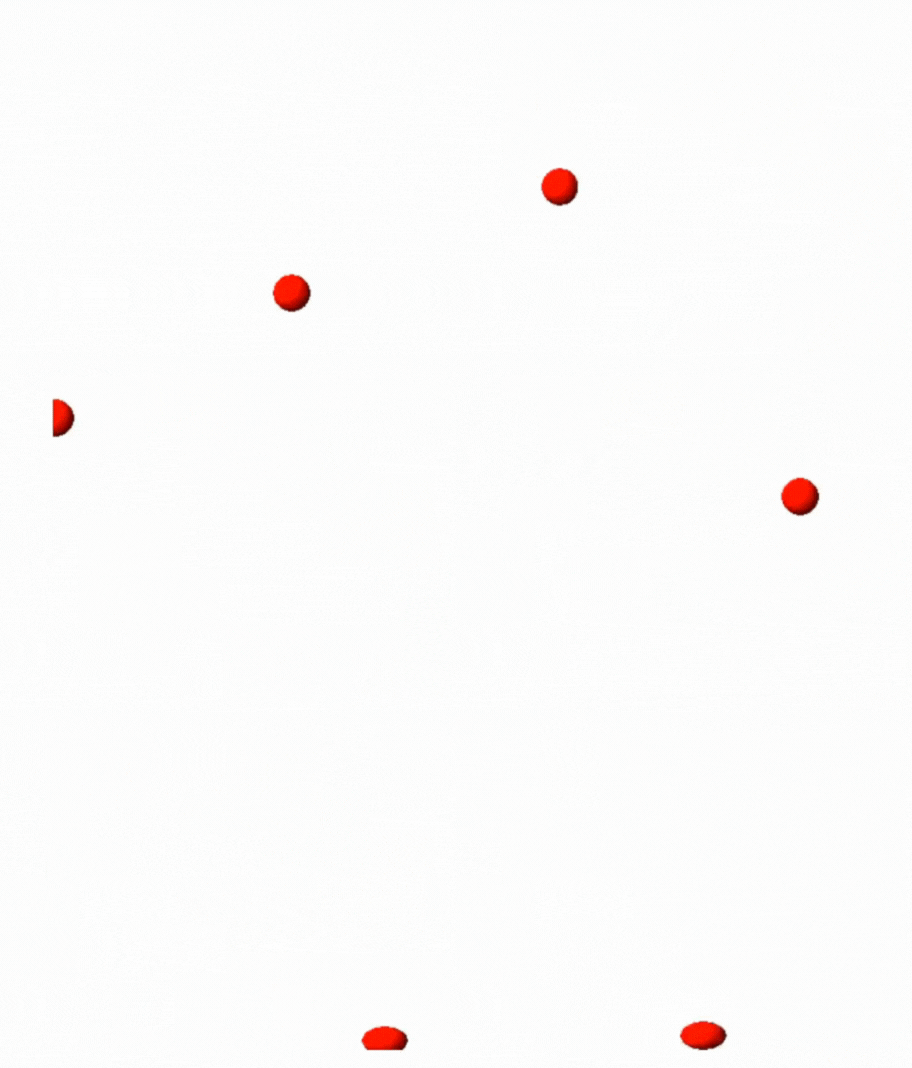
As we can see, the fourth dimension is required to fully visualize the moving ball. If we were limited to 3 dimensions, we would only have a frozen snapshot of the ball, we would lose the information about its shape in 3 dimensional space and time. So to fully visualize the ball we either need a movie, an image that moves through time, or we need to show the shape of the ball across its timeline. We view the world in 2D snapshots, our mind allows us to infer the third spatial dimension, and our memory allows us to infer the fourth dimension, the passage of time. The brain is an incredible machine, it allows us to navigate a four dimensional world with only half the dimensions directly observable to us. If we could observe the four dimensions directly, then you have to imagine in your mind the 3D path of the ball as a long arcing tube tracing the ball's movement through time. 
This would show the ball's shape across four dimensions, the expression of movement, of the ball's changing location in space represented as the ball's path through time. As we view the world as 2D snapshots, we rely on our minds to fill out the depth, and our memories to fill out the past positions. Our minds even predicting the future positions, hence we are able to catch a ball. In this sense, our minds allow us to view the world in 4D, but in a way that doesn't overload them. To view the world in 4D would be to see our entire lifetime of the space in our vision at once, which would be troublesome, and not very helpful. Luckily we can't, and we don't. We view it in a way that is manageable to us, in discrete chunks, with the spaces closer to us in time, more prominent in our minds, so we can make sense of it all. This is why losing our perception of this fourth dimension, such as with amnesia caused by dementia, is such a source of stress and anxiety. We lose one dimension of information and we can no longer make sense of the world. Originally posted on Quora by Steve Gunnis |
