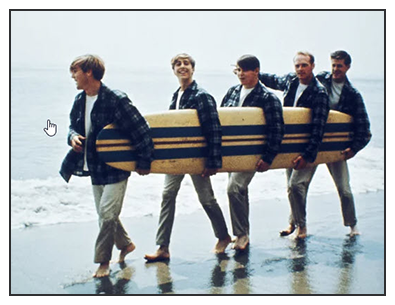
The Beach Boys were selling the California Dream.
And I bought it hook, line and sinker.
Today California is a pejorative. The whipping boy of the right. And many on the left too. They have contempt for the Golden State, primarily because living here is SO F*CKING GOOD!
Sure, real estate is expensive. But unless you live in the boonies, prices are high where you live too.
As for taxes? They're high, but you get services in return. Sure, we can debate red tape all day long, but the bottom line is if the government doesn't protect you, who will? Certainly not real estate developers, who will cut corners willy-nilly. That building collapsed in Miami, not Los Angeles. And that luxury tower in New York leans, but we don't hear constant complaints about construction in California.
As for Los Angeles... There's famously no there there.
A New Yorker comes to L.A., looks around and says "I don't get it, New York City, greatest city in the world!"
An Angeleno goes to New York, looks around and says "New York City, greatest city in the world! But I'd rather live in California."
And that's all you need to know.
But most people don't know, because they've never been here. The goal is no longer to get in your car and drive cross-country, no one moves anymore, it's too expensive. But back in the day...
If you read the news you'll learn Hollywood is imploding. But that's not really the case, the movie studios are not moving headquarters, productions are just going to far away places because of insane financial incentives. And Netflix? Which now rules visual entertainment? That's based in CA. As are two of the three major record labels.
It's all here baby, not only entertainment, but tech. Sure, there's a bit up in Seattle, but Miami flopped as a tech hub and New York City has always been an also-ran, and why is this so?
The California ethos.
Everybody in California is so into their own trip that they leave you free to be on yours. Nobody's in your business. And no one judges you for your choice of career/interest. Everybody's equal. Sure, there's racism, and homelessness, but even the unhoused got the memo. I mean if you're living on the street wouldn't you rather do so in L.A., where the weather suits your clothes?
Now a bunch of people moved to California in the aftermath of World War II. They moved to the west coast for deployment to Japan and assessing the landscape, they never moved back. And they had children who grew up California natives in the fifties and sixties. And we in the rest of the nation felt left out, dreamed of moving to California, primarily because of the Beach Boys. They were selling a better life. A carefree one where you had fun, fun, fun in the sun and there were pretty girls on every corner and there was the ocean and surfing and WHAT'S NOT TO LIKE?
Nothing. We dreamed of moving to California. As I've always testified, I moved here because of the Beach Boys, and this is 100% true.
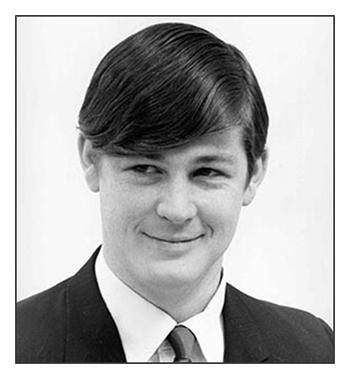
So Brian Wilson grew up in Hawthorne. Which we knew from the "Beach Boys Concert" album. A suburb in a suburban era. Today young people are moving back to the city, but in the fifties and sixties the goal was to exit the concentration and move to the brand new suburbs, where everybody had a piece of land and the schools and even the books were brand new. You were usually the first family to live in your house. And there were two cars in the driveway and your mother didn't work... Sure, there was sexism, but the truth is wives didn't have to work because their husbands earned enough money to provide for the family. So there was a wholesome element, of picnics and sports, and the Beach Boys' music embodied this. This was not hot town, summer in the city. This was sand between my toes, I'm cooling off in the water and at night I'm cruising to the burger stand with my buds. Sounds great just writing that!
And that's what the Beach Boys did, write that music, catalogue the life of the teenager. But ones who didn't grub grades to get into a good college, who weren't afraid of working on the assembly line, but those who had confidence things would work out, they were OPTIMISTIC!
Then again, so were the sixties, unlike today.
Now my first exposure to the Beach Boys was actually through Jan & Dean. Brian Wilson co-wrote "Surf City." His name appeared in so many credits.
And then I heard "I Get Around" on the jukebox at the Nutmeg Bowl.
In the fall it was the Four Seasons' "Walk Like a Man."
Then Kennedy got shot, the Beatles took over the jukebox and it was all British Invasion until the spring hit and then we had "I Get Around" and ultimately "Rag Doll." "Rag Doll" was great, but in the vein of what had come before. "I Get Around"?
I get around, yeah
Get around, round, round, round, I get around"
Talk about hooking you from the very first note...
And then there were the harmonies, the multipart vocals and that dancing lead guitar and...
I gotta find a new place where the kids are hip"
This definitely wasn't Liverpool. It's like the Beatles hadn't even happened. This band was cruising the boulevards in California and...
This was radically different from wanting to hold your hand and the darkness of England. This was America. If we weren't already, we wanted to live THIS LIFE!
Then there was "When I Grow Up," with the counting of age numbers in the background. And those lush vocals there too.
And "Dance, Dance, Dance." And the remake of "Do You Wanna Dance?" And the hit single version of "Help Me, Rhonda," which was not on the "The Beach Boys Today."
And then, in the heat of the summer of 1965, in July, just after school let out, came "California Girls."
By this point everybody was music crazy. Imagine everybody who's an influencer today, everybody on YouTube, everybody bingeing Netflix, by 1965 all those people were addicted to music, which they received on their Japanese transistor radios, which no kid was without. They were exotic once, like the original iPods, but then you could buy one for ten bucks. It may not say "Sony," but you could dial in your favorite station and it's on my no-name device that I first heard...
That intro. Orchestral. Not the rock of the time, but from a previous era, ethereal, and then with a sense of majesty, and then it started to gallop along like a calliope, like a horse going up and down on the merry-go-round. And this intro was so long, nearly half a minute, that it couldn't be sliced off by deejays in their usual style.
And then...
I really dig those styles they wear"
When every band was trying to sound like they were born in the U.K., the Beach Boys were doubling-down, they were California proud. And you only had to listen to the sound of the record to ultimately be enraptured by the chorus:
This is the masterpiece, this is the breakthrough, too much credit is given to "Good Vibrations," which was great, but "California Girls" too was unlike anything we'd heard previously. The Beatles weren't employing an intro like that. And the lyrics might sound simplistic, but the best things usually are.
"California Girls" didn't jump out of the radio. It quieted everything down, relaxed you, and after hearing it once you listened in rapt attention waiting for the explosion of the lyrical part of the song.
I remember riding my Raleigh with my transistor strung over the handlebars listening to WABC so I wouldn't miss "California Girls," and the day the album came out I rode said bike down to the local discount store, Topps, came home, broke the shrinkwrap and became INFATUATED!
"Summer Days (And Summer Nights!!)" had the hit version of "Help Me, Rhonda," and of course "California Girls," but it also had one of my top three Beach Boys songs ever, "Girl Don't Tell Me."
Don't you know who I am
I met you last summer
When I came up to stay with my gran'"
If you ever had a summer camp girlfriend...
"Girl Don't Tell Me" reveals the greatness of Carl Wilson. Yes, we hear it again in "Good Vibrations," but Al Jardine sang "Help Me, Rhonda," Denny played the drums and sang the lead on "Do You Wanna Dance," and Mike Love was the frontman and Brian Wilson wrote, played and sang...the Beach Boys were a MONOLITH! This was not a studio creation whose strings were pulled by faceless cigar-chomping fat cats, this was the younger generation, in control, singing their truth and it was MAGIC!
It was quite a trick.
And then I started working my way back, buying the catalog.
I started with 1963's "Surfin' USA." Sure, the music of the title track might have been written by Chuck Berry, but there was the recital of all those SoCal surfing locations. We had no idea, we LEARNED them from this song. A surfing craze exploded. And sure, there were surf instrumentals previously, but really it was all driven by the Beach Boys (and Jan & Dean) with songs like these.
And when you bought albums back then you played them over and over and over until the grooves turned gray from the heavy tonearms on our all-in-one record players. We knew every note, every lick.
And "Surfin' USA" contained "Shut Down." Today's youngsters may not even get their license until they're in their twenties, but the car culture of yore, based in California? Every male could tell you every car model by model, year by year.
But really, there is magic in the album tracks. The exquisite "Farmer's Daughter." With Brian Wilson's falsetto. In this era of streaming availability more people are aware of this track, but back in the singles era, it was a secret. Almost as good was "Lonely Sea." Which summoned up the mood of looking out over the ocean like...this is the magic of music.
From there, I went to the original 1962 album, "Surfin' Safari."
Not quite as polished as what came thereafter, "Surfin' Safari" was the kind of song you heard once and knew by heart. And the original first single, "Surfin'," was there too. But on this very first album, there was a car song, "409." The Beach Boys were already plotting their switch from the water to land.
And then 1964's "Shut Down Volume 2," which began with "Fun, Fun, Fun."
And she cruised through the hamburger stand, now
Seems she forgot all about the library
Like she told her old man, now"
I was addicted, I'd play these records all day and all of the night, to the point where even my father knew the lyrics, and he HATED rock music! But he sang these words with a smile because...
My sister kept saying she was going to the library in his T-Bird.
And I'd stand in front of the mirror and try to comb my limp hair like Dennis Wilson's, unsuccessfully.
And when we went to Atlantic City's Steel Pier that summer I insisted we go to see "The Girls on the Beach," since it included a scene with the Beach Boys.
I was all in.
I bought "In Concert," but "Beach Boys' Party!" I skipped. Hell, I wasn't even a teenager, I didn't have much cash! But even at that age I perceived that the LP was a dash for just that, cash.
As for "Pet Sounds"? A legend now, a blip on the radar screen back in '66. "Sloop John B" was a monster, but they didn't write it, which hearkened back to the bad feeling of "Party!" "God Only Knows" got only scattered airplay and it wasn't until "Shampoo" that most people even HEARD "Wouldn't It Be Nice."
But then came "Good Vibrations." His pocket symphony? It needs no appellation, it's as great as the legend. But what people forget is context, by this time everybody was testing limits, all the action was in music.
I got "Smiley Smile" as a gift. I liked "Vegetables."
Surprisingly, the Beach Boys had a hit with "Darlin'" when the band seemed to have been plowed under by competitors and the sound was changing, after all, Jimi Hendrix asked us if we were experienced in that same year of 1967. But that album, "Wild Honey"? The title track was not really a hit, but the theremin and Carl's vocal made it indelible. And speaking of Carl, have you heard the version of "I Was Made to Love Her" on this LP? A much rocker take than Little Stevie Wonder's.
I skipped "Friends," which Brian in his later years said was his favorite. And then when I went to buy it, it was no longer in the stores. Ah, the days of physical retail.

And from thereafter, starting with "20/20," I bought them all upon release. And there was one more hit, "Do It Again," but the Beach Boys were seemingly locked out of the chart.
But then they switched labels and... "Sunflower" is a stone cold masterpiece. "Surf's Up" was more commercially successful, and good, but not as good. But it did contain the second of my three favorite Beach Boys cuts, "'Til I Die," which I thought no one even knew until Don Was testified about it in his 1995 Brian Wilson documentary. By that time the Beach Boys narrative had changed, there was Brian Wilson and then the rest of the group.
He was a mad genius. Eccentric. Was he damaged by drugs? Sure, fans like me knew that he'd had an episode and had refused to go on the road, but with the success of 1974's "Endless Summer," the only way forward was to bring Brian back. And they tried and tried, but it never really worked.
There had been isolated moments in the seventies, like "Marcella" and "Sail on Sailor." But "15 Big Ones"? I bought it, but it was akin to "Party!," you could see the hope of cash registers ringing in the background. And then came 1977's "Love You." Brian was handed the reins, he was in complete control, and I won't say the result was execrable, but it was confounding. Brian seemed to be living in an alternative universe. He made the record he wanted to hear, but it seemed simplistic and childish and was not so listenable.
And then it was over. Brian was pushed into the background, and Carl and Mike took back control of the band.
But there was one last hurrah, "Good Timin'," the opening track on "L.A. (Light Album)," but this sixties magic had no place on the radio in the AOR heyday, never mind all the press being about the disco version of "Here Comes the Night." The Beach Boys were in the rearview mirror except for the non-Brian "Kokomo" and the story became about Brian himself, constantly.
We had the 1977 documentary with Belushi and Aykroyd imploring Brian to go surfing, he was cited under a California law, and they brought a bloated Brian to the beach where he flailed around on a surfboard in his bathrobe.
And then the Eugene Landy years.
And the endless solo albums that were billed as comebacks but really never were.
We got the legend, we got lawsuits, and at the center was this lost man who you could only feel sorry for, who oftentimes just made you wince.
Brian and his legend were public. And you'd run into him. For me, the first time was at a movie theatre in Westwood. I've lived in L.A. long enough now to know that you don't talk to famous people unless you're introduced, but I just couldn't hold back, I had to go up and testify. Brian didn't turn away, but he didn't do much more than grunt in response.
And then there was that BMI awards dinner where he sat through the entire evening with his head on our table until he got up to accept his award.
And then I went out to the Canyon Club and the also dearly departed Jeffrey Foskett took me on the bus to talk to Brian, who was vocal, and somewhat upbeat, but when he spoke it was in a staccato fashion and his eyes were looking nowhere close to mine and Jeffrey confided in me as we walked away that Brian was truly fearful of being shot on stage.
They talk about all those drugs he took negatively affecting Brian, but schizophrenia shows up just about the time he lost it. What was the cause of his mental issues? Does it even really matter at this point?
But I saw Brian performing live time and time again, notably at the Wiltern, when he put out "Imagination," which recaptured the classic sound.
Brian was on the road constantly. The advance press was adoring, but the shows... The rest of the band were covering up for him.
And then fewer and fewer people would go.
Was his wife pushing him? To be on the road? Whose idea was it to adopt five more children? Brian could barely cope with himself. It seemed like a sad story, everybody was depending on Brian, who had a hard time depending on himself.
I think the best insight into Brian is delivered in Jason Fine's 2021 documentary, "Long Promised Road," when they drive around L.A. and Brian talks about the early days, you get his true, unfiltered thoughts, even though he seems far from normal.
But the truth is at this point unless you're very young, everybody knows Brian Wilson's story. Which is tragic on so many levels. Should we start with Murry? Once again, you know, so I won't.
And I hate to say it, but on some level Brian was already dead. You can't go on the road if no one will buy a ticket. Yes, this was the guy, but he was a shell of himself.
So, the internet is full of obituaries. Telling the story. Of Brian's genius.
But Mike Love has been unjustly overlooked for his lyrics. Van Dyke Parks gets all this credit, but really it's Mike's words that embodied the California dream. But Mike is not a tragic figure. And however talented Mike is and Carl was, it's clear that Brian was on a whole 'nother level. Do we call it genius? What exactly does "genius" mean? You can employ the label, but you can't truly quantify it.
But Brian Wilson came up with these songs out of thin air. They were in his head and he had to convey what he thought to those in the studio to concoct these dreams that infected listeners all over the world. Beach Boys music is forever, younger generations are exposed to it via Disney. And if you want pure Americana...
So...
My third favorite Beach Boys song is "Catch a Wave," which I first heard as Jan & Dean's "Sidewalk Surfin'."
Jan's long gone, Dean's still here. All the Wilsons are now six feet under. We're not going to get any more Brian Wilson music. But I think all this focus on the Brian saga was evidence of what he once did. People wanted him to know how much they appreciated his work. And people wanted to marvel. But unlike so many rock heroes, Brian was still around.
A bunch die. Others go on the road and use tricks to cover up for their declining vocals. But Brian contained no artifice, he was this bumbling, smiling man 24/7. You could get an enthusiastic quote from him, he still loved music, and you could get him to show up, but was he ever really there? In many cases, I'd say no.
And now he's gone.
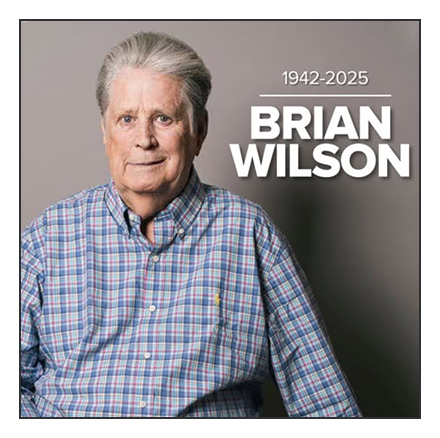
What do you want me to say? Testify as to Brian's gifts and leave out all the messy elements? This guy lived until 82, which seems to be the new 27, with Sly Stone having just died at this age.
And the truth is as regularly as they've been dropping in the past few years, the wheel is going to speed up, until all the original heroes are gone and then those who were around to experience them in their heyday will be gone and history will be rewritten, California will be seen as a hellhole and pundits will tell you that the Beatles were successful because people were yearning to be upbeat and optimistic in the wake of the assassination of JFK, when nothing could be further from the truth.
You see the Beatles were just that good. You only had to be exposed, and you were all-in. We don't have acts like that today. Taylor Swift, the Weeknd? Give me a break. The Beatles fired on all cylinders.
And they never took their eye off Brian Wilson, because they knew he could always be a threat. They weren't fooled by the in many cases adolescent lyrics. The music underneath, where did that come from? Certainly not from playing endless gigs in bars in Germany. And I knew Nick Venet, nice guy, but if you think he was in control of these records, you're wrong.
No, it was all Brian. Not all the lyrics, and not every song, but the lion's share.
And as he went along, he became more childlike. Even more raw. Being in touch with himself he delivered an insider's take that we could all relate to. Everybody else was too self-conscious, but Brian could sing about being in his room.
And tell my secrets to
In my room
In my room"
We've all got 'em, we're in our heads all the time, we don't dare verbalize our thoughts, but Brian encapsulated them in his music. He may not have written the lyrics, but when he sings them, and the arrangement...it's a peek into someone's brain, you can relate, it's not in-your-face, it's life itself.
Lie awake and pray
Do my crying and my sighing
Laugh at yesterday"
It was all a dream. The music in Brian's head, which he then made real. Which entranced all of us, causing some of us to come to California to get closer to living this life.
But I won't be afraid"
Brian was very afraid. Which is why he wanted to be alone. But when he was most alone is when he connected with us most.
When it's all said and done, there's a body of work. Sure, there's the story of the man himself, but this is the case with every human, albeit not publicized, never mind the trials and tribulations. But how many people can say not only that they left a body of work, but it encapsulated not only a location, but a whole generation?
Brian Wilson is now a state of mind. The body may be gone, but his feelings, his thoughts, are still palpable, still as fresh as when they were committed to wax. And we still can't figure out how he did it.
And it wasn't like he was living a highfalutin' rich and famous TMZ life, lording it over us, rather when you listen to his music you get the feeling that he's living right next door. And you'd invite him over for a barbecue, but you'd rather not interrupt him, not bug him, but leave him alone in his world, where he captured our world in his music.
Once upon a time he was a typical teenager, seemingly anyway. Playing football. But he couldn't resist the sound. It wasn't about money and fame, but as he gained traction and gained the ability to express himself unfettered his talent flowered even more, not that everybody could always understand it, not that everybody was on his team.
NOW we say "Pet Sounds" is a masterpiece. During the heyday of Brian Wilson's creative output there were not endless stories about the man, most people listening to the records had no idea who he was, never mind his personality, his identity. And now we know too much. But does that change the magic of the records?
If you want to honor Brian's memory, listen to the records. And the funny thing is as soon as you press play you will be involved, they are not at a distance, like so many legendary tracks.
At the end of the day Brian was human. And we could relate. Because we are too. Did he truly know we appreciated him? Well, he had a desire to create great works of art to impress us, but he never really basked in the adulation, he even seemed somewhat checked-out when bathed in applause when he played live. But one thing you can say is whether he was playing his piano or not, whether his vocals were covered up by the background singers or up front and center and out of tune, he was into it. It's like Brian stepped into another land, where music was everything and he stayed there. He seemed oblivious to others' wants and desires. He couldn't deliver what you thought you wanted. But then he'd reach back and deliver something completely unexpected, that you needed. Over and over and over again.
Good vibrations? He picked up on them, hearing what regular humans could not. And then he'd deliver these feelings to us and when we heard his music, we felt good.
And we still do.
He gave us good vibrations.
We picked up excitations.
Come here, California girls are really something special.
And the Pacific roils in a way the Atlantic does not.
And it is sunny almost all the time.
It's the California Dream.
And Brian Wilson is the one who hipped us to it.
I cannot thank him enough.
And I'm not the only one.
Sure, it's a physical place, but it's also a state of mind, and it's baked into those legendary records. Every emotion was covered, but underneath it all was an optimism. Brian was a product of the sixties, he digested the culture and fed us back to us, one step ahead, he led us. And we are continuing to march to his beat.
Gone, but never to be forgotten.
That's Brian Wilson.