Bugs & Lights: A Strange Little Mystery
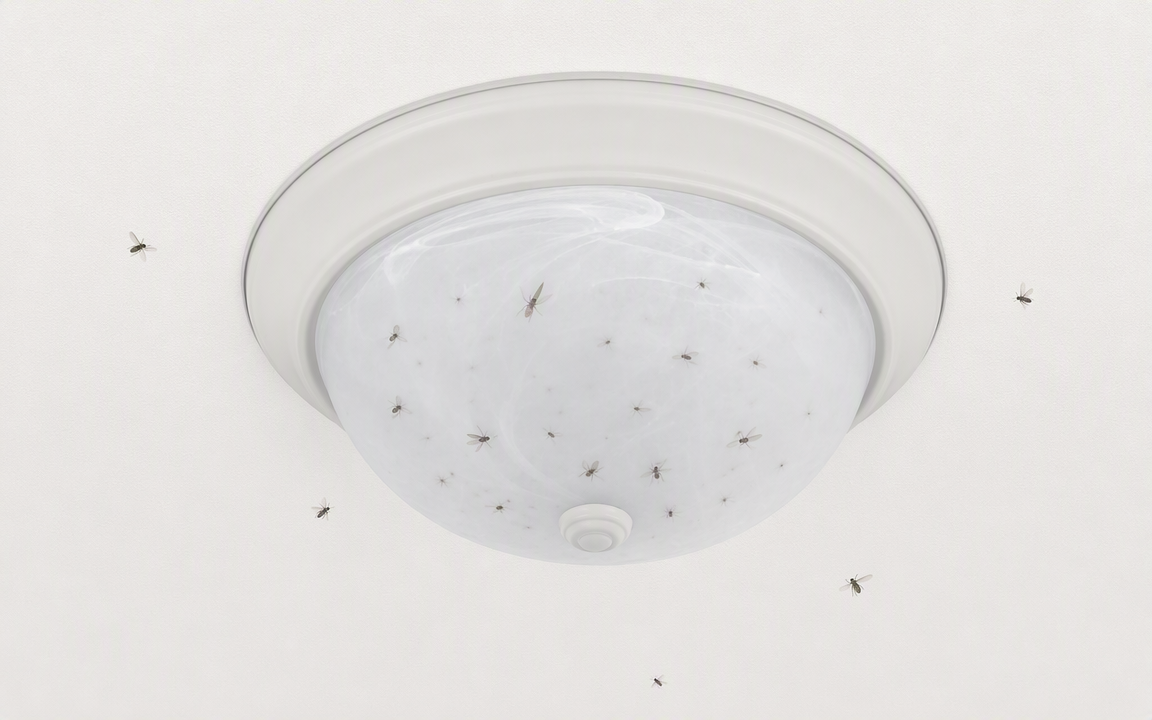
Here's something I noticed and have often wondered about: light fixtures that appear to be tightly sealed and flush against the ceiling nevertheless often begin to host a variety of flying insects that somehow find their way into the interior of the light and quickly die — leaving a bright, clean white light bespeckled with the dead carcasses of numerous bugs.
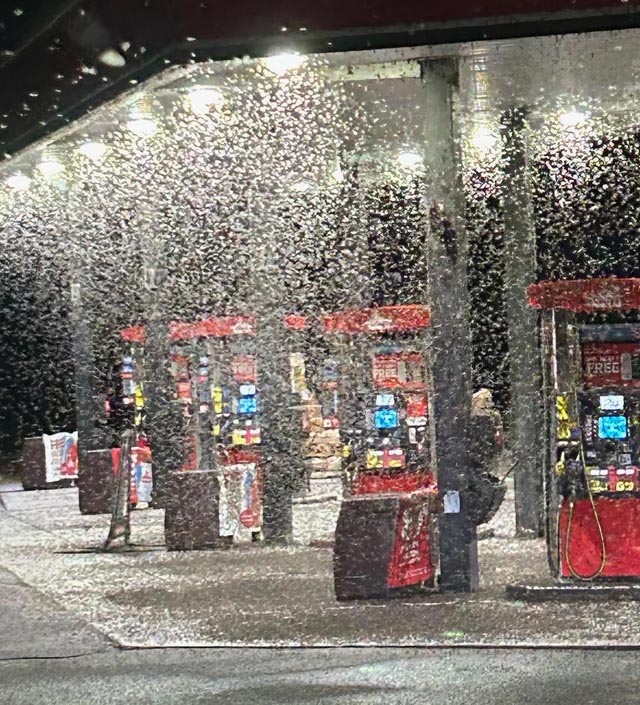
Now, I certainly understand that flying insects are naturally attracted to light. Warm summer nights can create swarms of mayflies and mosquitoes so thick they sometimes make it hard to walk, or even breathe, when they're nearby.
But I couldn't quite understand how the little buggers manage to find their way into a light fixture that's tightly and securely mounted on the ceiling of your kitchen. Whatever looks appealing to a mosquito — finding its way into your kitchen and spotting a warm, bright light calling out to him — must be a severe shock to the system once he actually gets inside and discovers a deadly hot, dry environment with no easy way out.
So I asked. And here's what I learned.
This one turns out to be genuine biology, not just a nuisance. A few things are stacked together:
Positive Phototaxis
Most flying insects — moths, gnats, flies — are drawn toward light sources. It's an ancient orientation reflex, likely evolved for navigating by the moon and stars, that gets hijacked by artificial light. Warmth from the bulb adds a second pull for some species.
They Can Get In Far More Easily Than They Can Get Out
Flush-mount fixtures aren't actually sealed. There's almost always a gap around the mounting plate, the edge of the glass or plastic diffuser, or where the fixture meets the drywall — installers rarely caulk these, and even building code doesn't require it. An insect can wriggle in through a gap barely wider than its own body, but flying back out through that same gap requires precise navigation in the dark, working against its own instinct to fly toward the brightest point in the room — which, once it's inside, is now behind it, not ahead.
The Heat and Light Itself Become the Trap
Once inside, the insect is right next to a hot bulb, with no complex escape-route memory to fall back on — insects don't build mental maps. Many species simply keep circling the light source until they die of exhaustion, dehydration, or heat.
- Blink Before You Know It — the bug that never touched my eye, and the biology that got there first
- Why It Won't Leave Your Face Alone — it followed me down the street, and I finally found out why
- Mosquitoes, Fireflies, and Crickets — a Minnesota summer soundtrack