Burn On, Big River
Driving home from a show the other afternoon, I heard a Randy Newman song I’d somehow never really listened to. “Burn On,” from his 1972 album Sail Away, is a slow, sweet, almost sentimental ballad about Cleveland, Ohio. It sounds like a love letter to a hometown. Then you notice what he’s actually singing about: a river so polluted it caught fire.
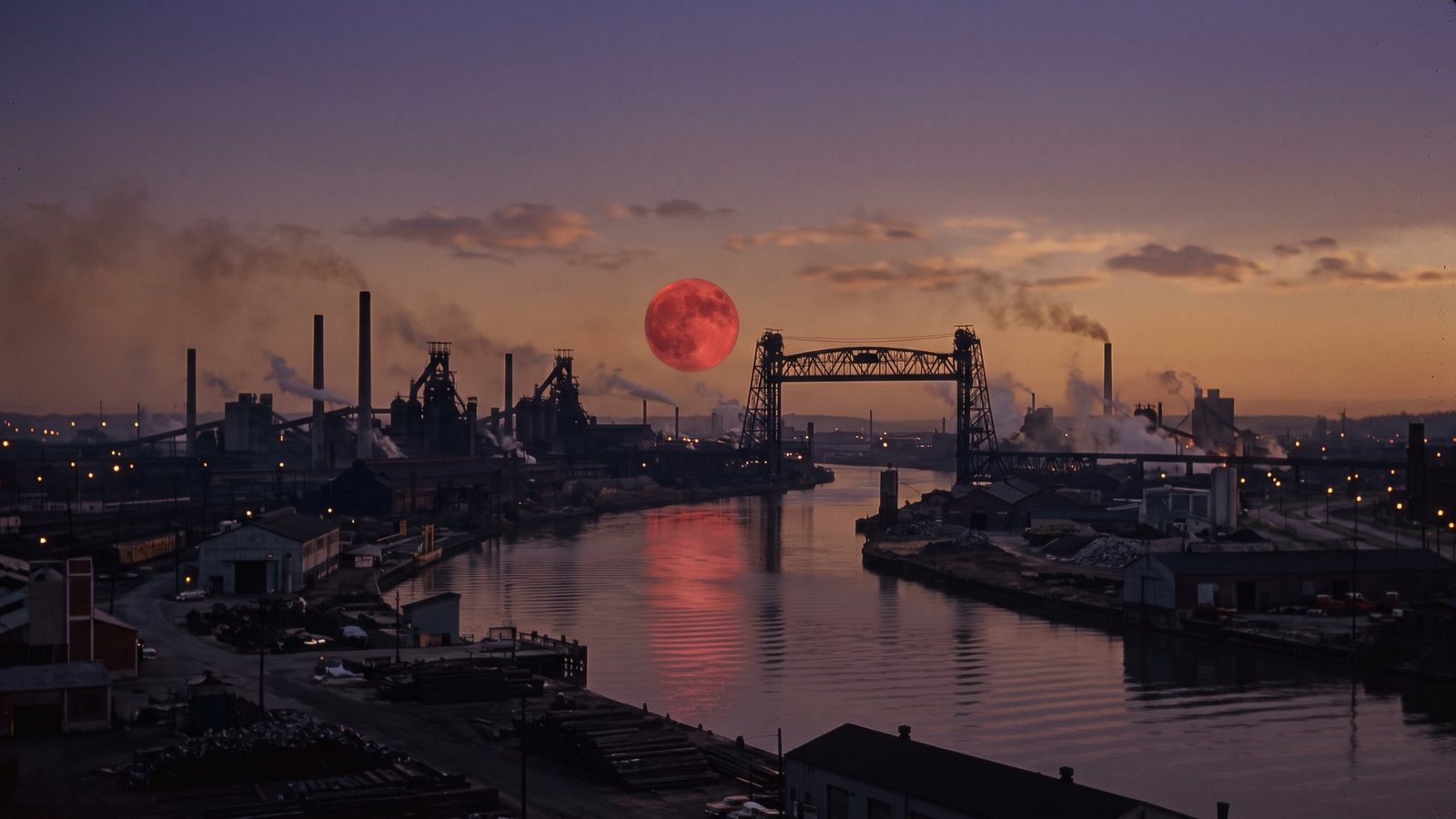
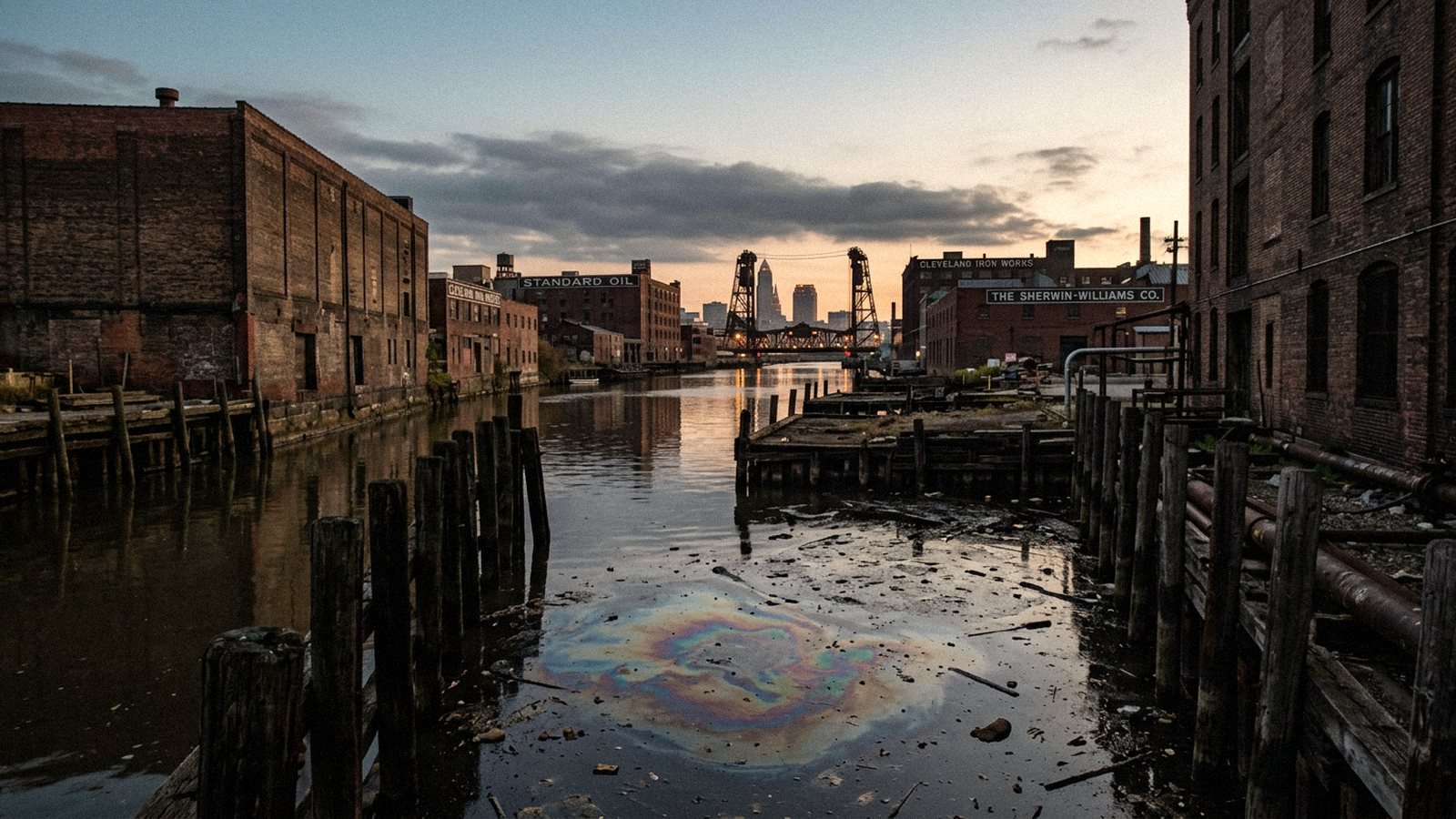
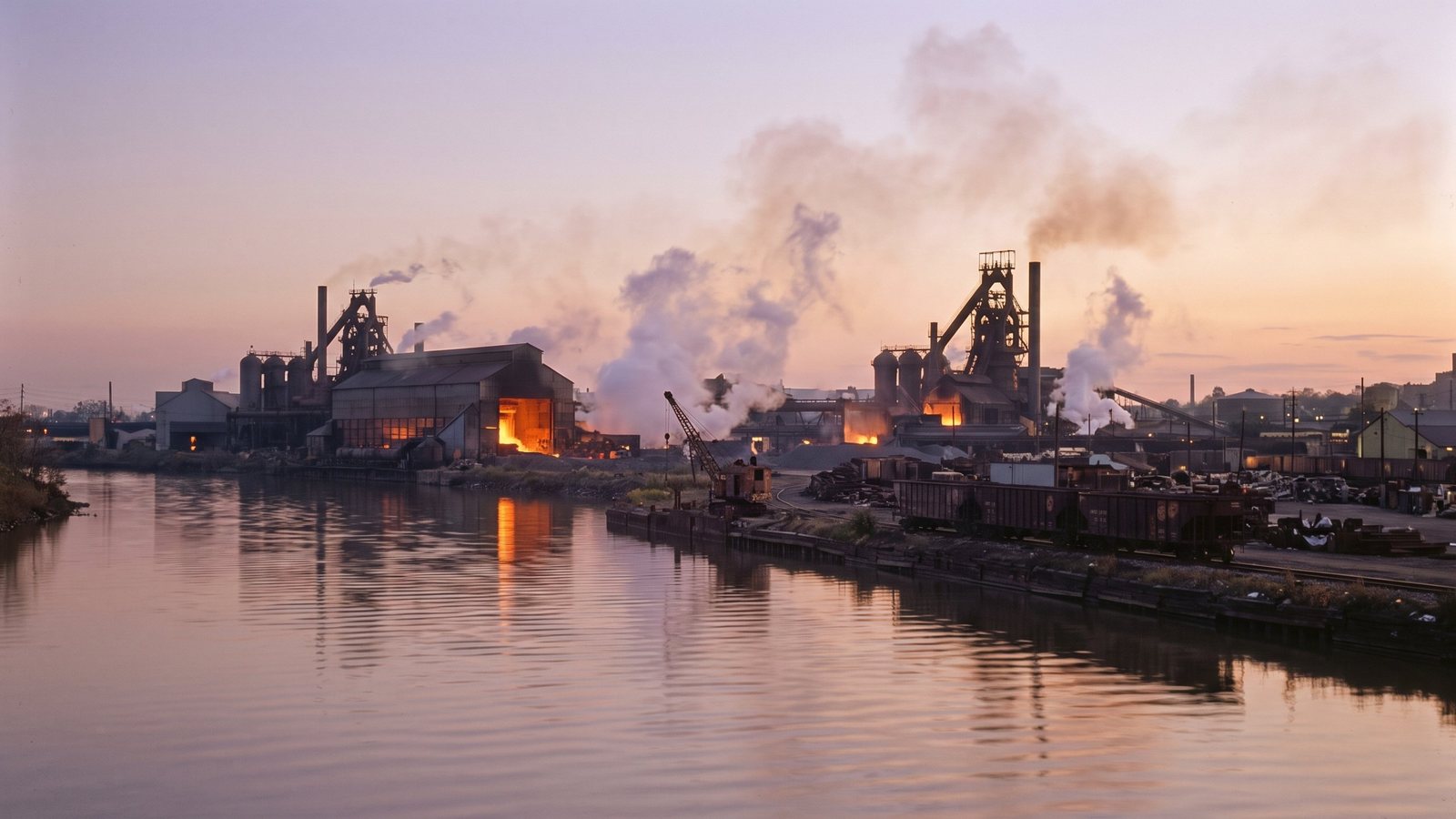
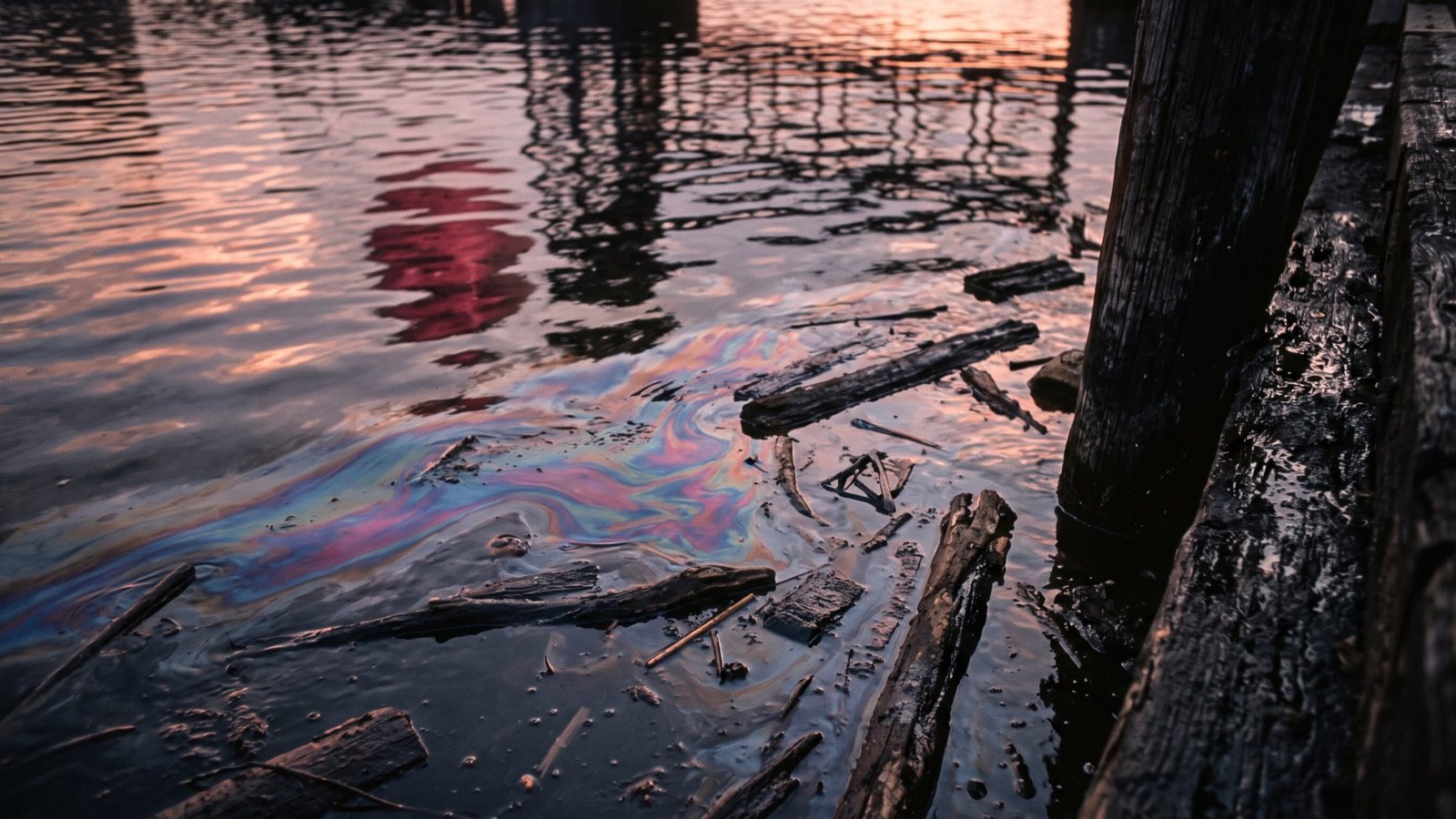
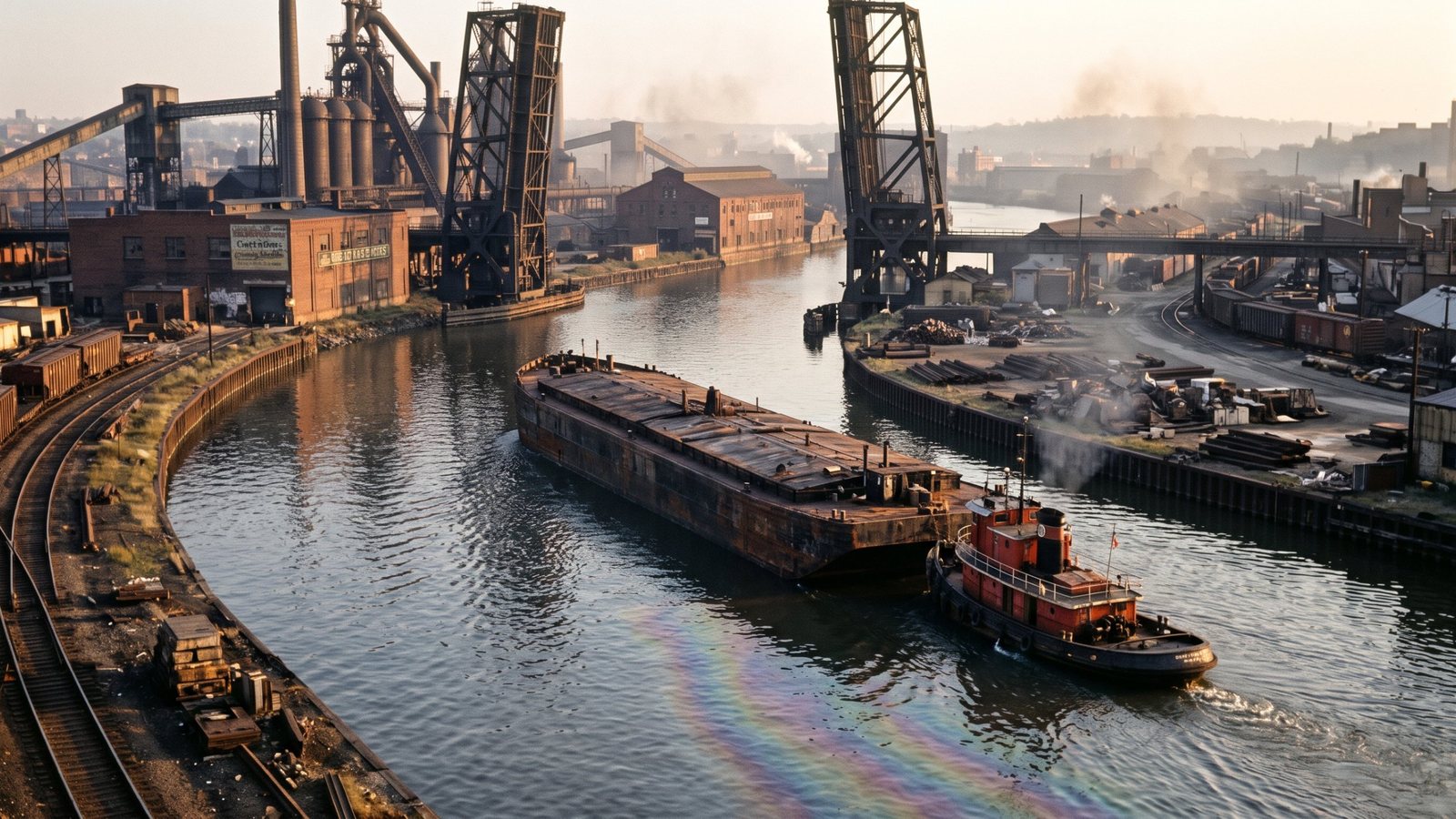
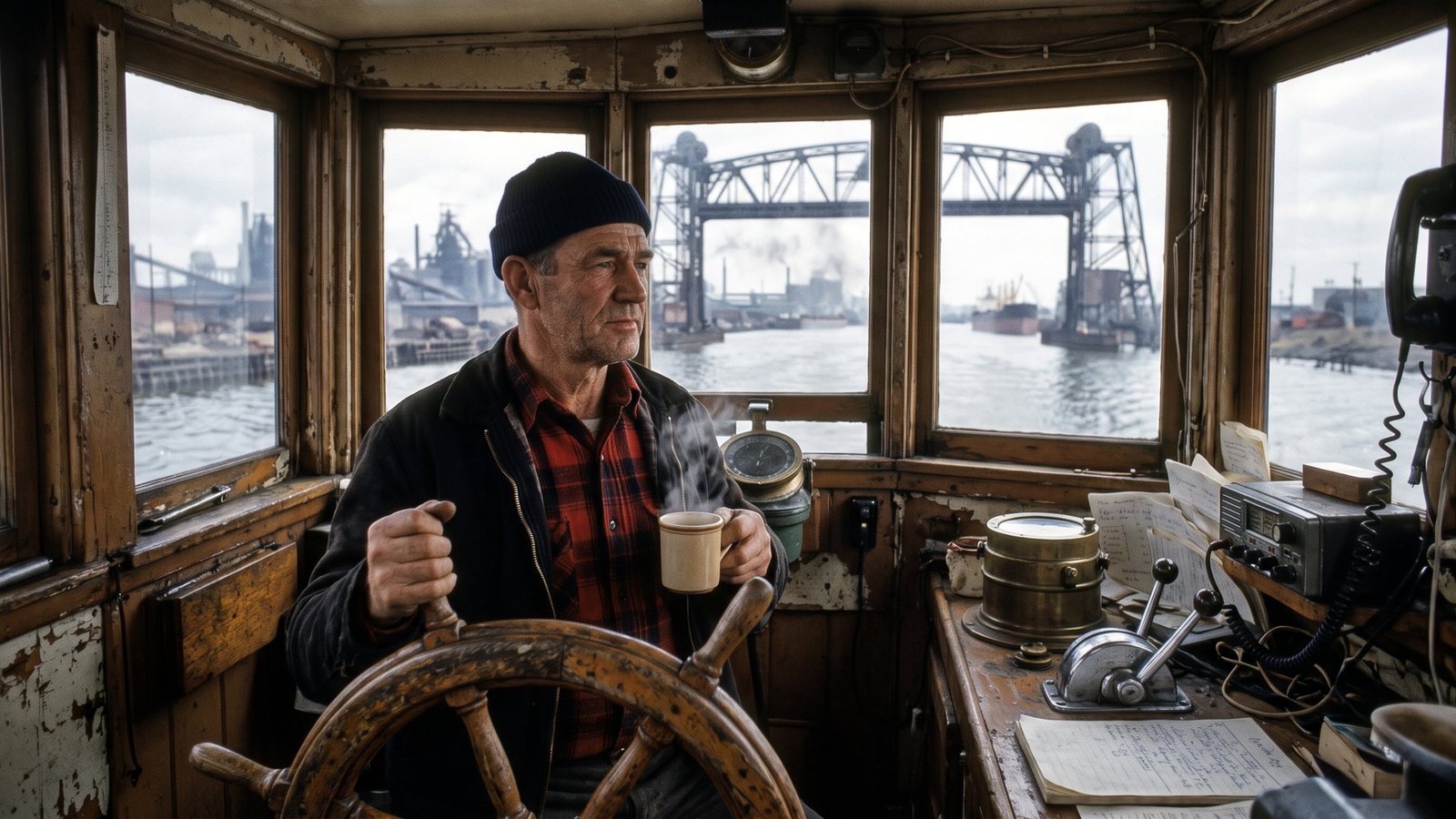
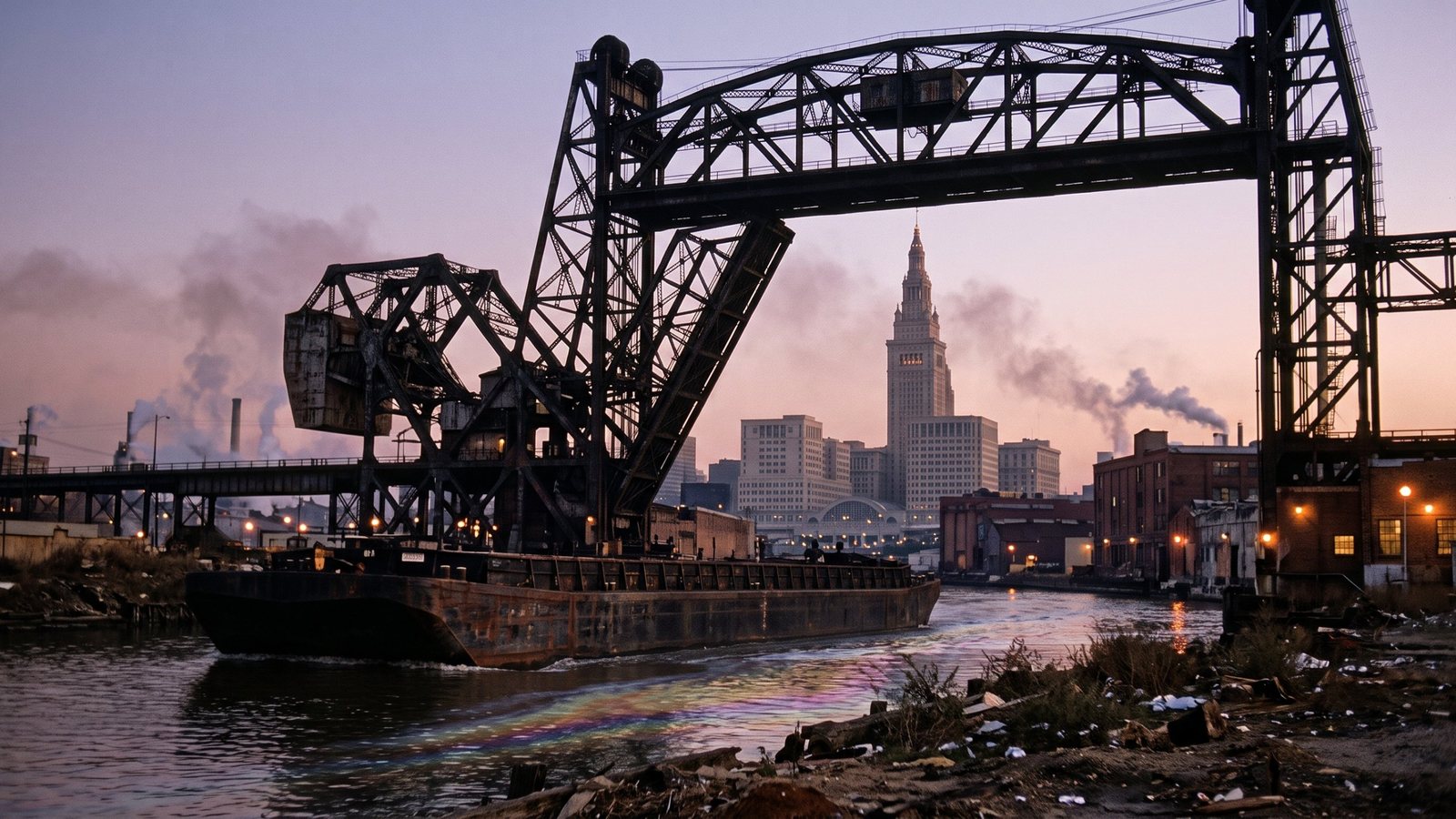
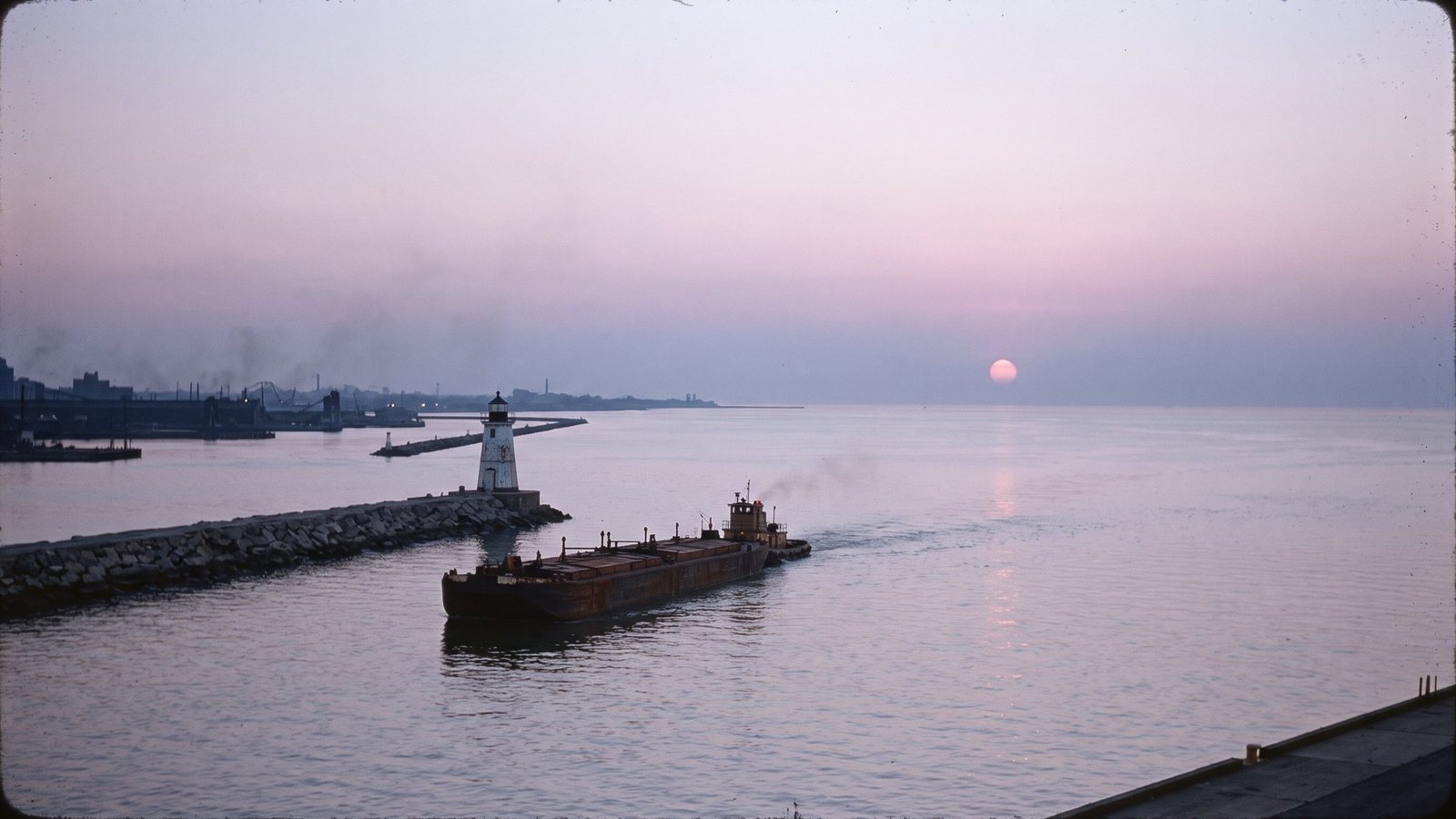
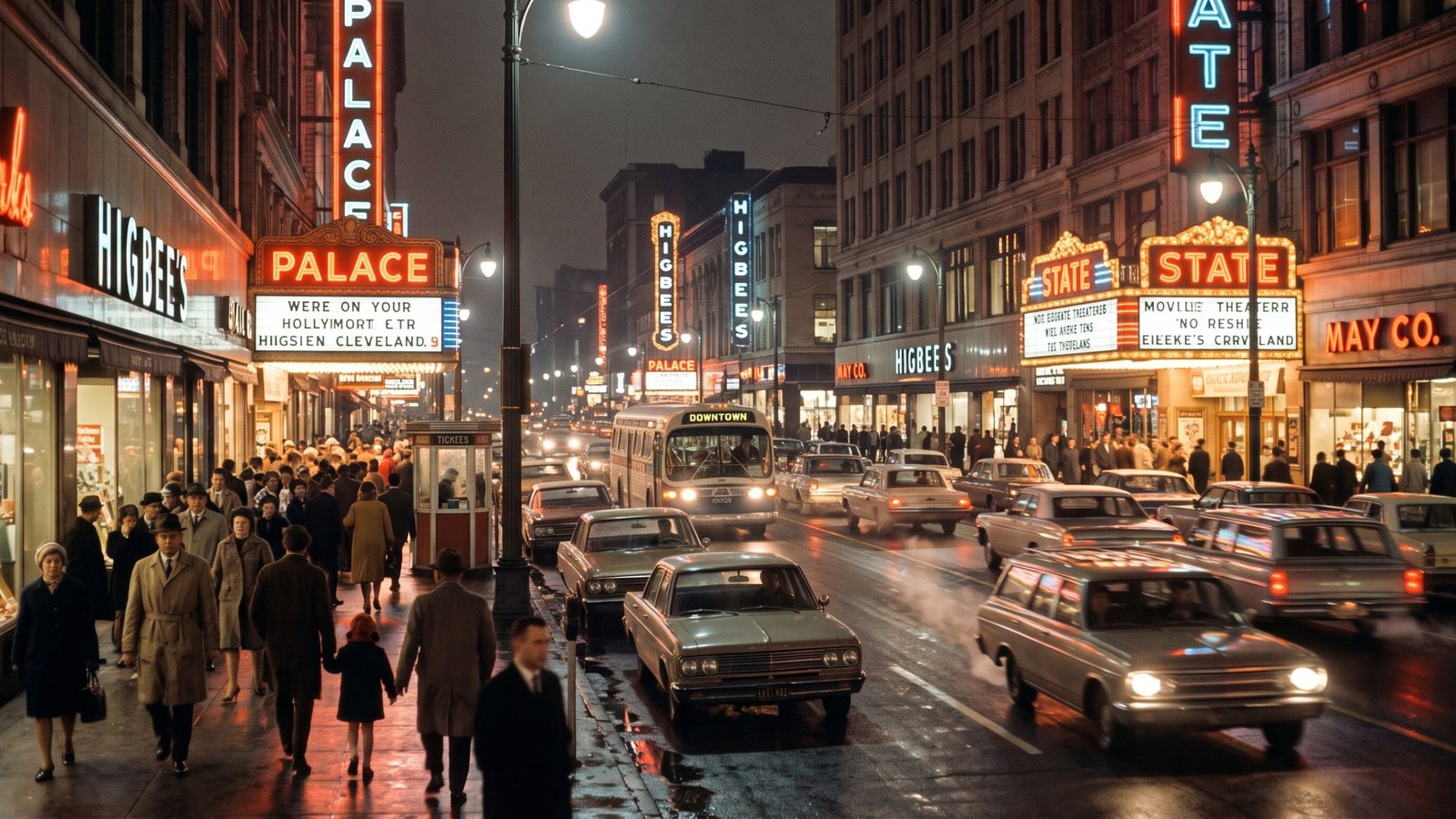
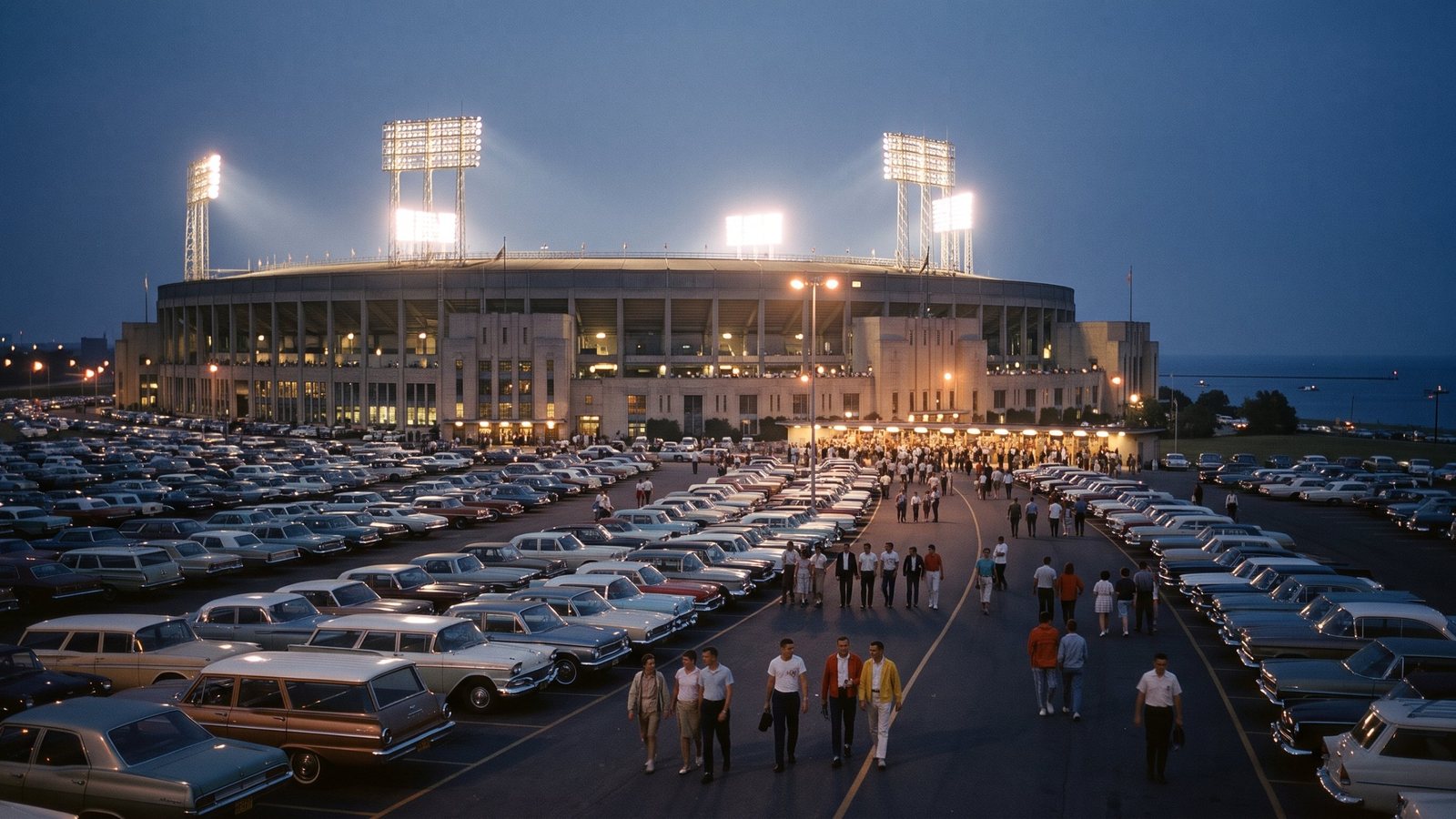
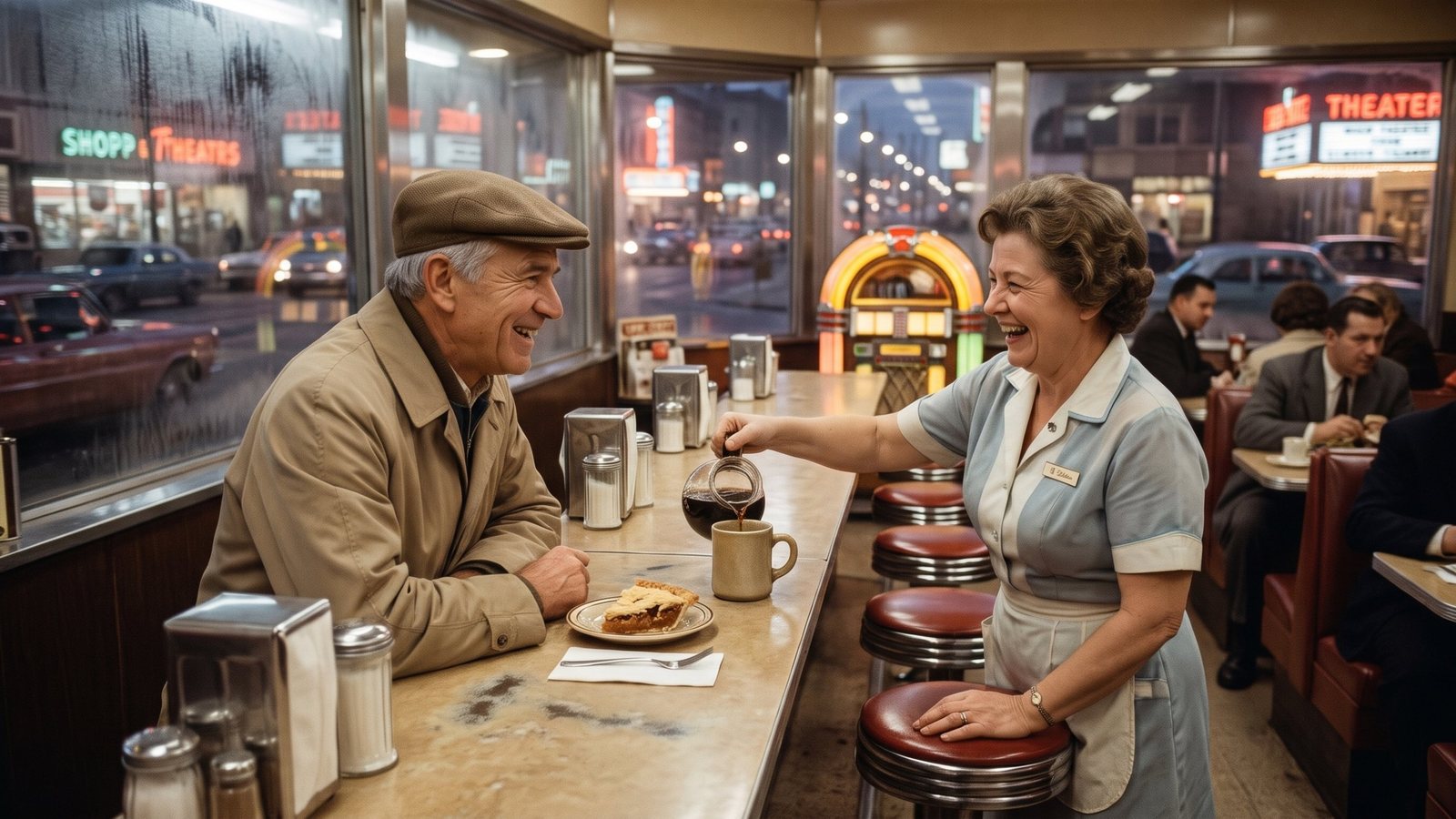
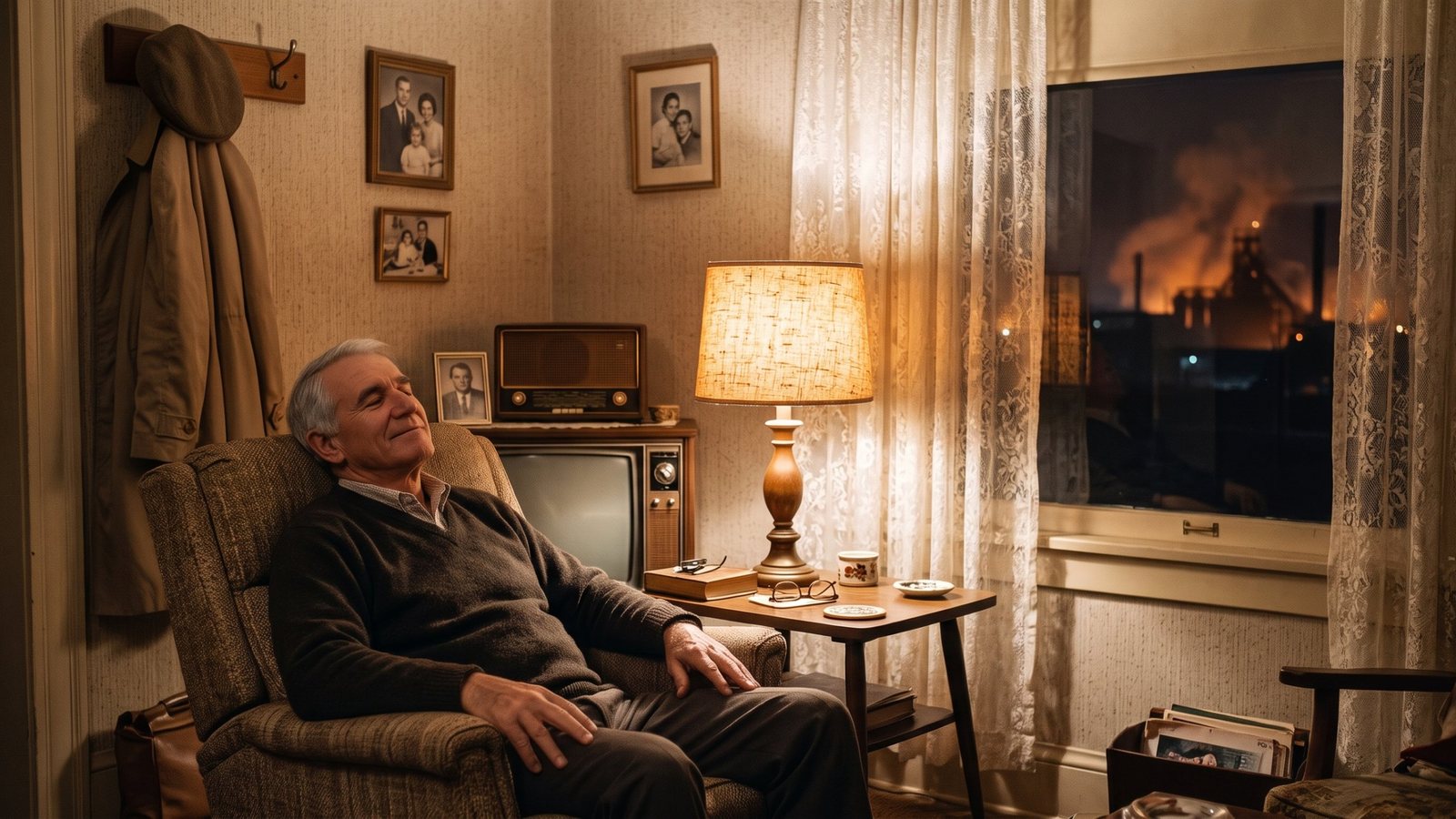
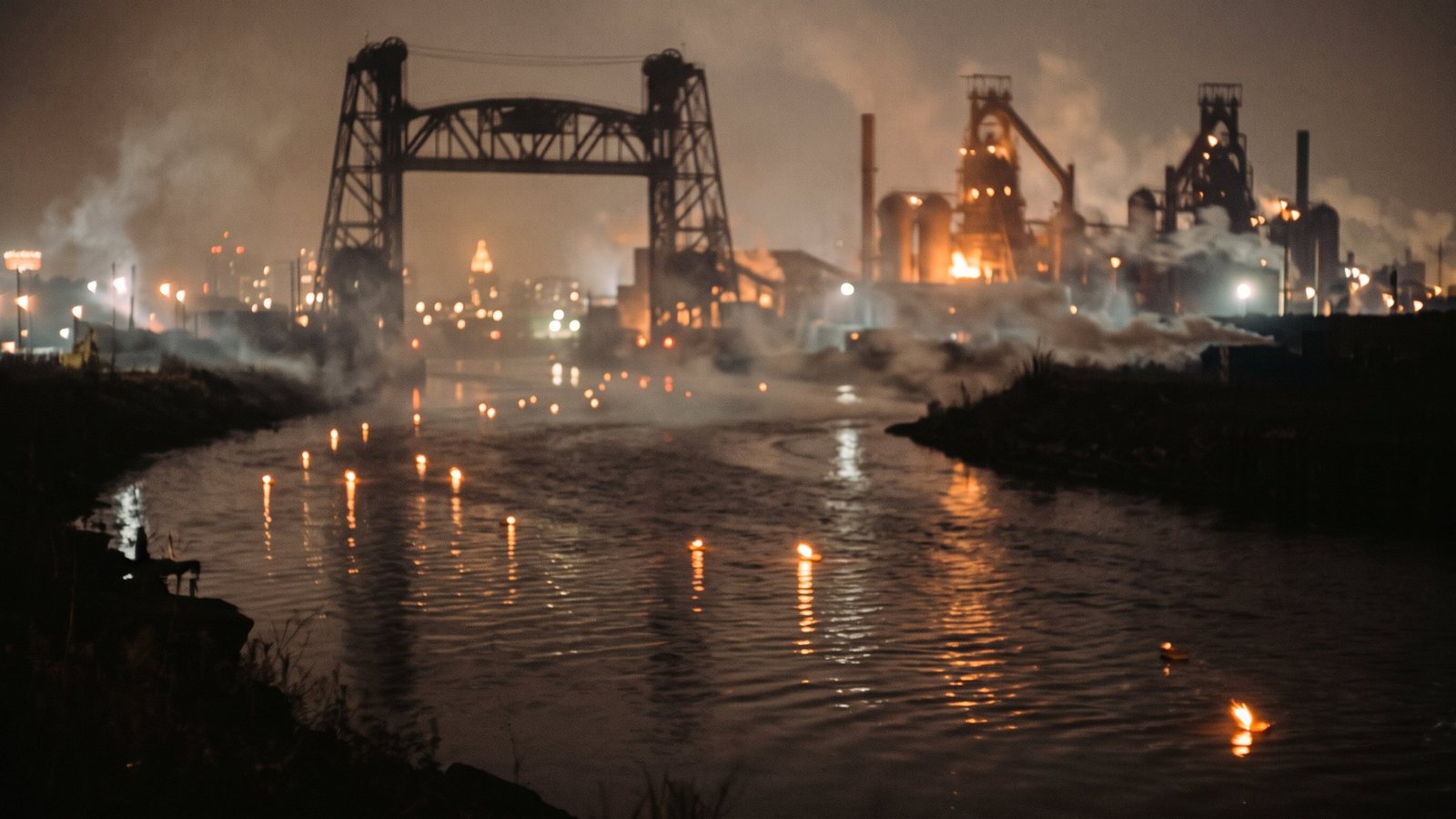
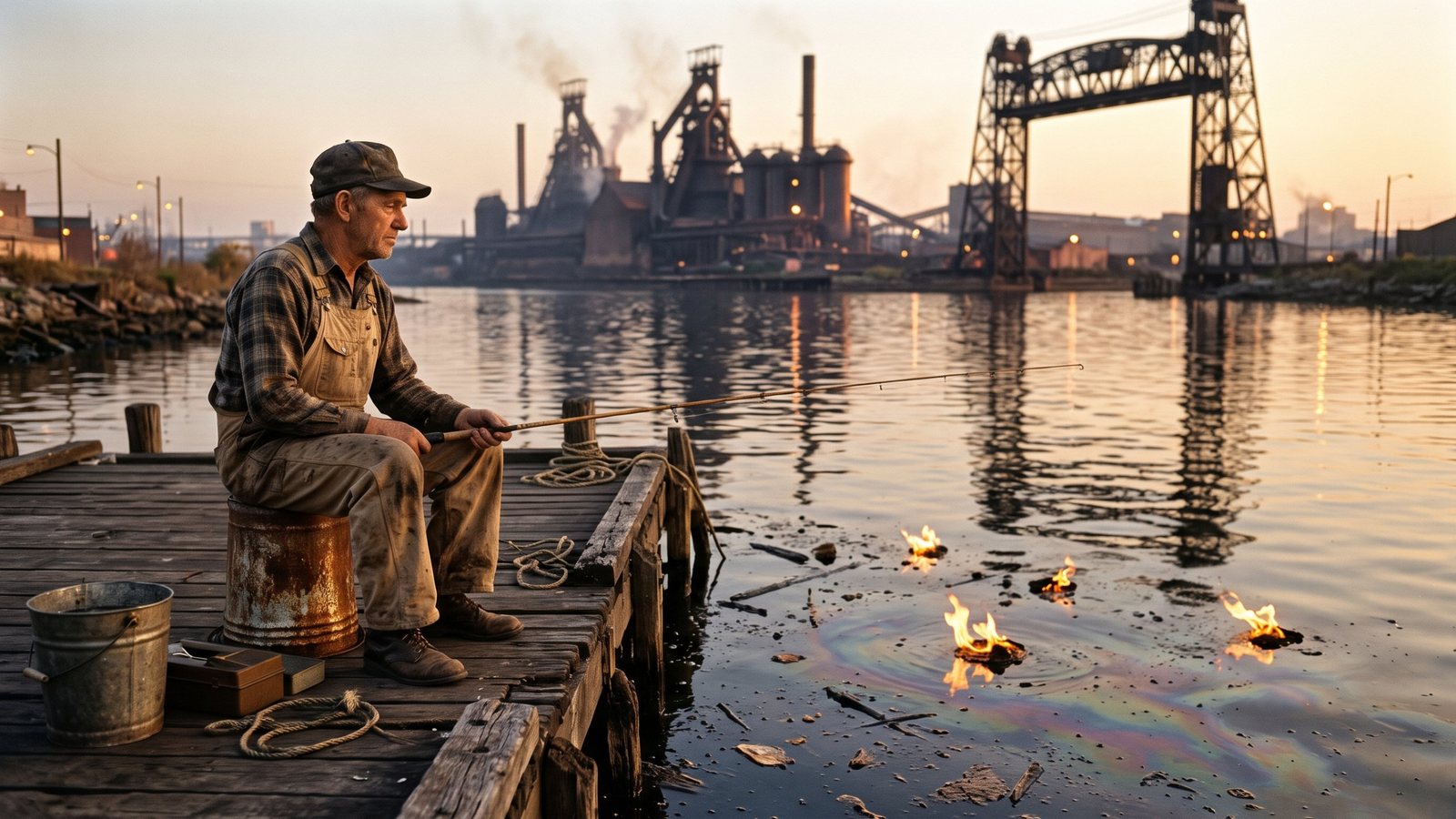
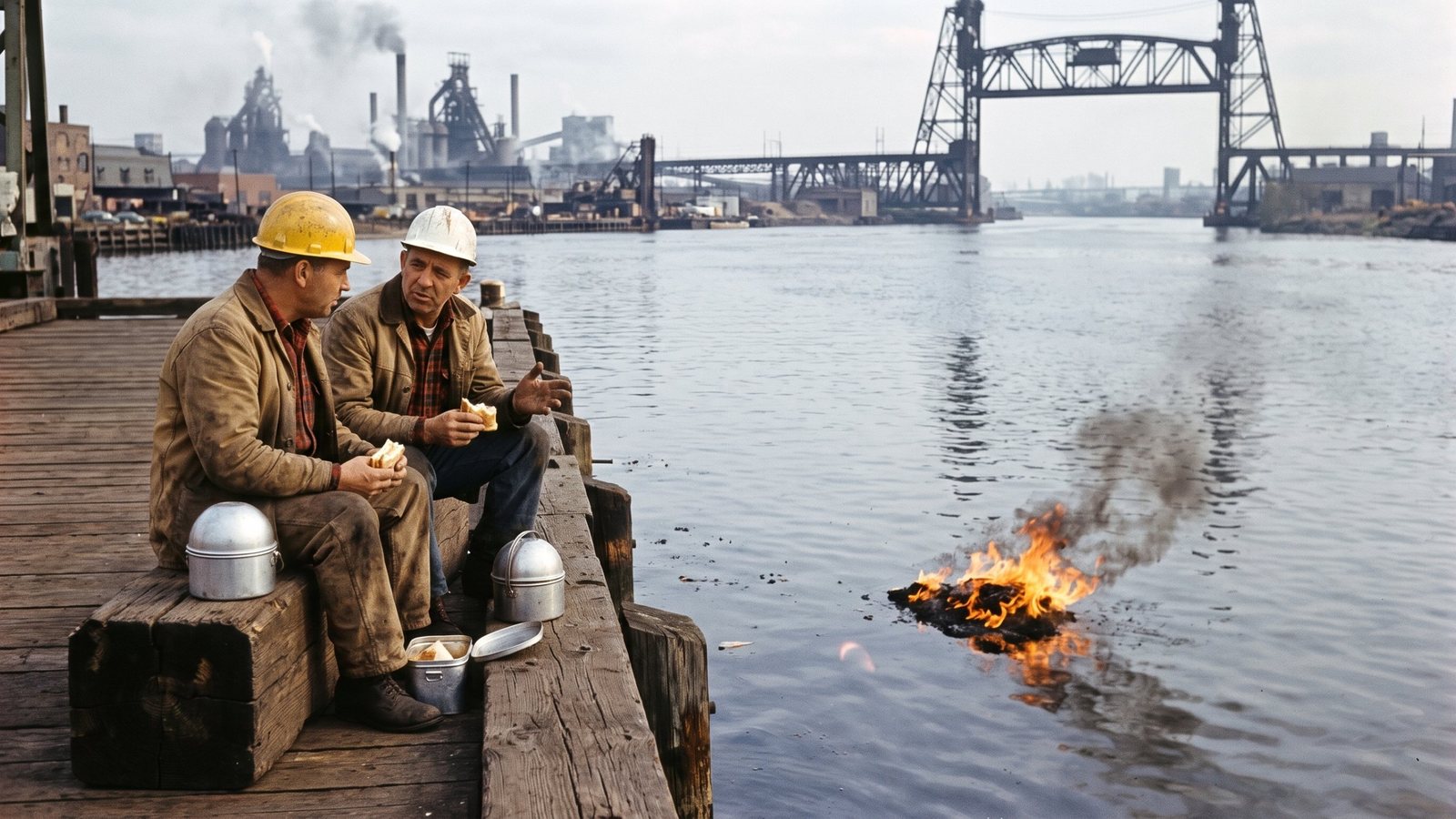
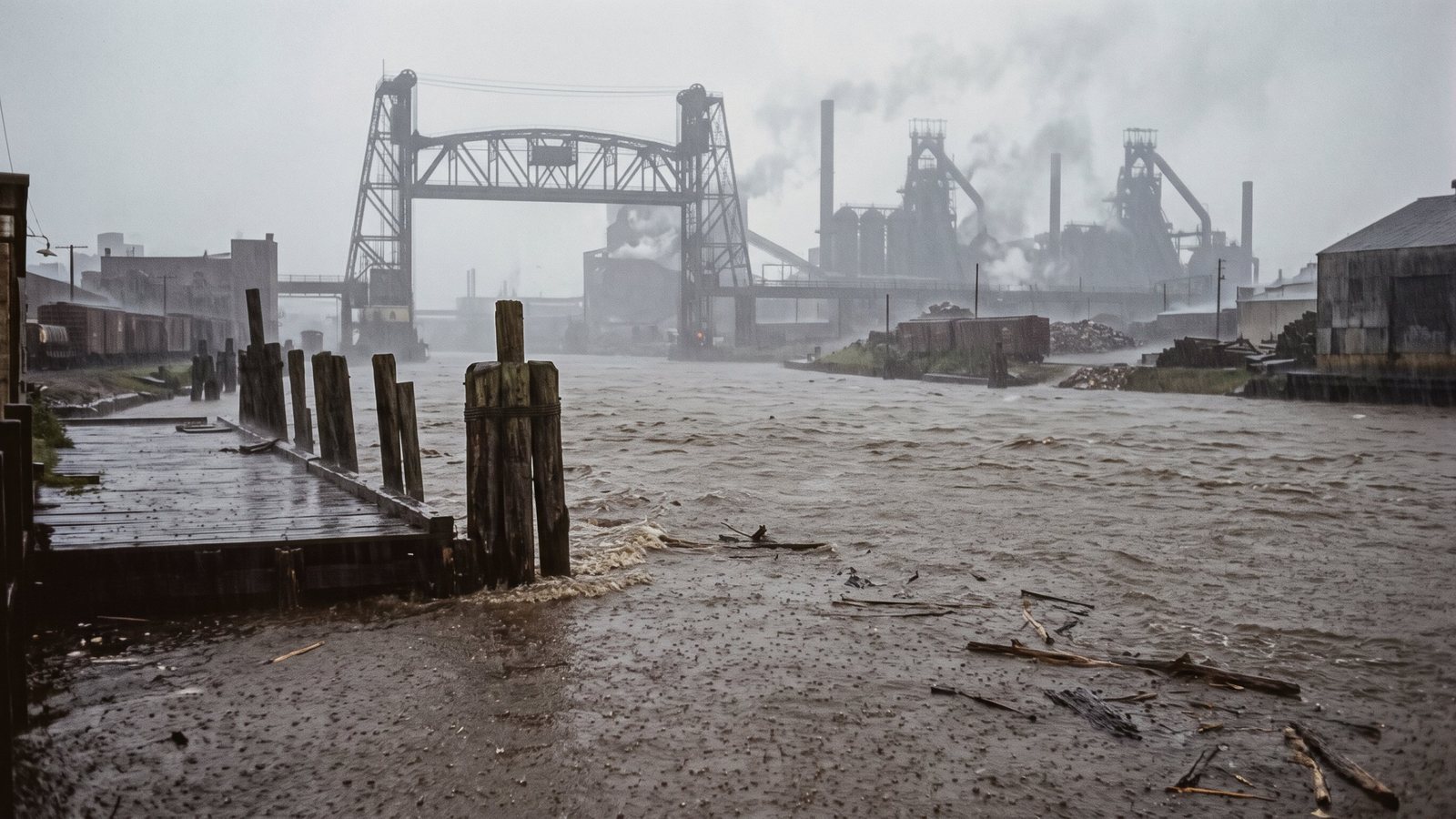
That’s Newman all over, the same deadpan genius behind “Political Science,” which is on the same album. So I made it a picture book: 22 photo-style images in the look of old 1969 Kodachrome slides, following one gray-haired Clevelander who loves his city, smoke and all.

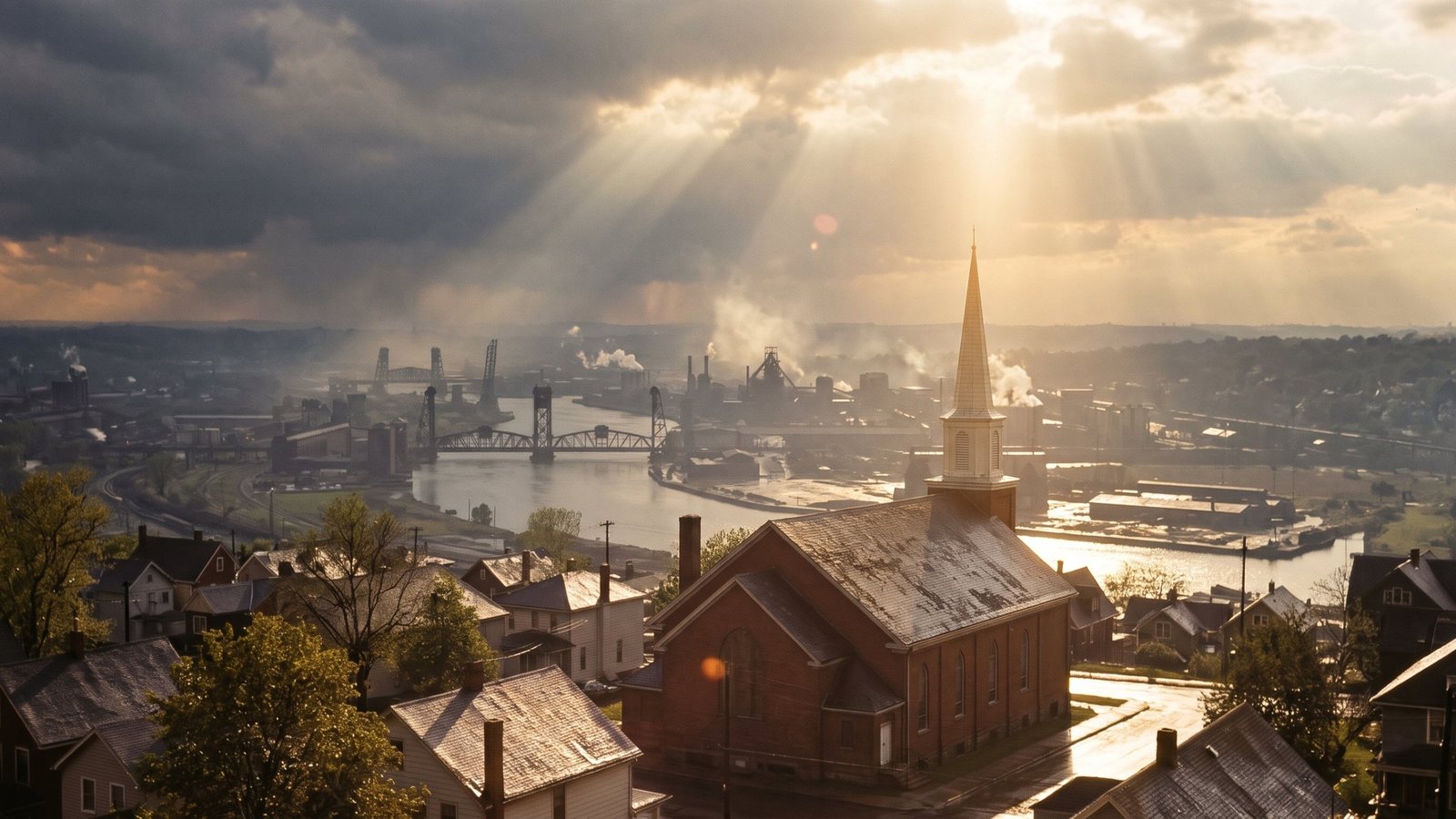
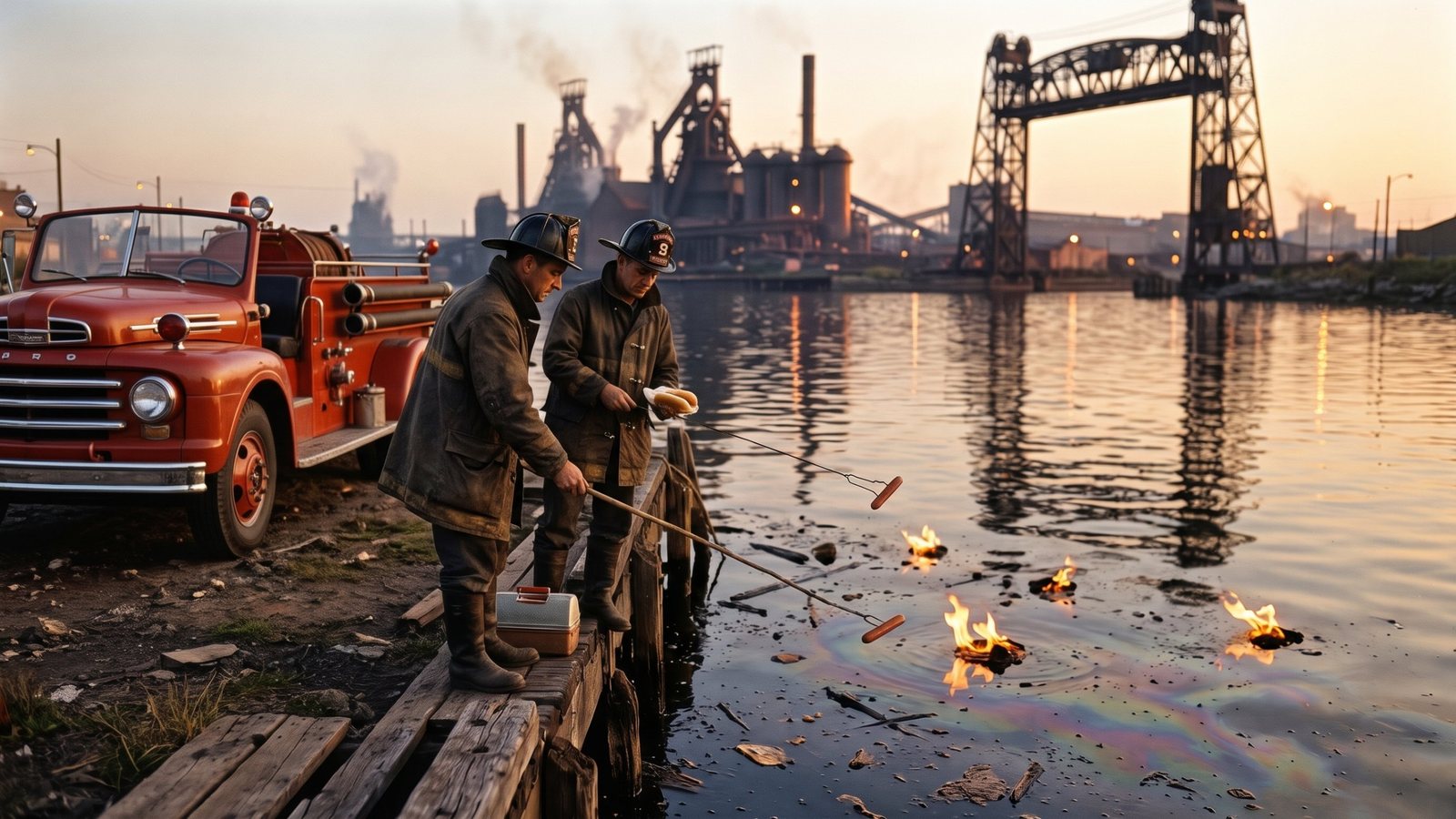
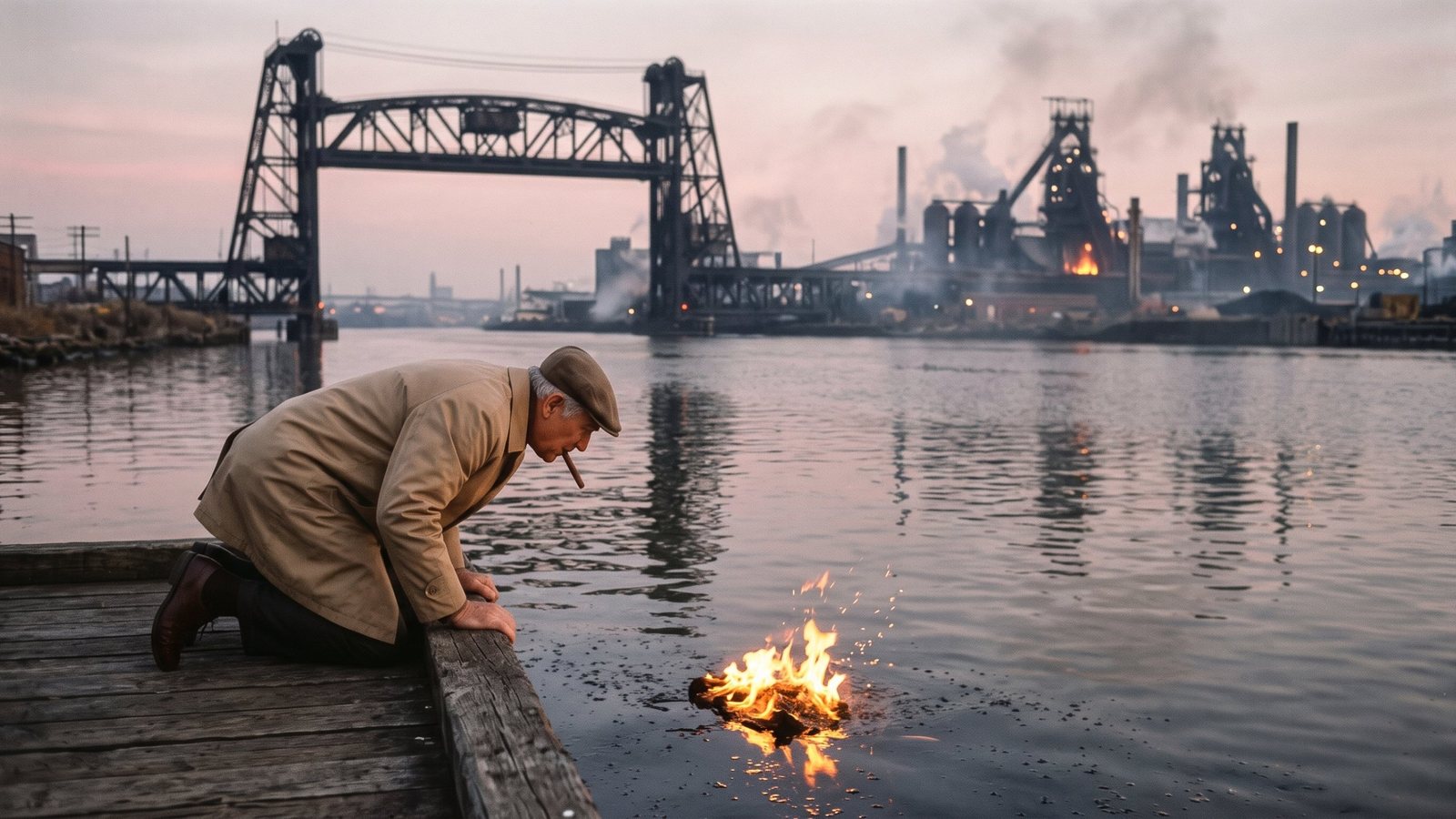
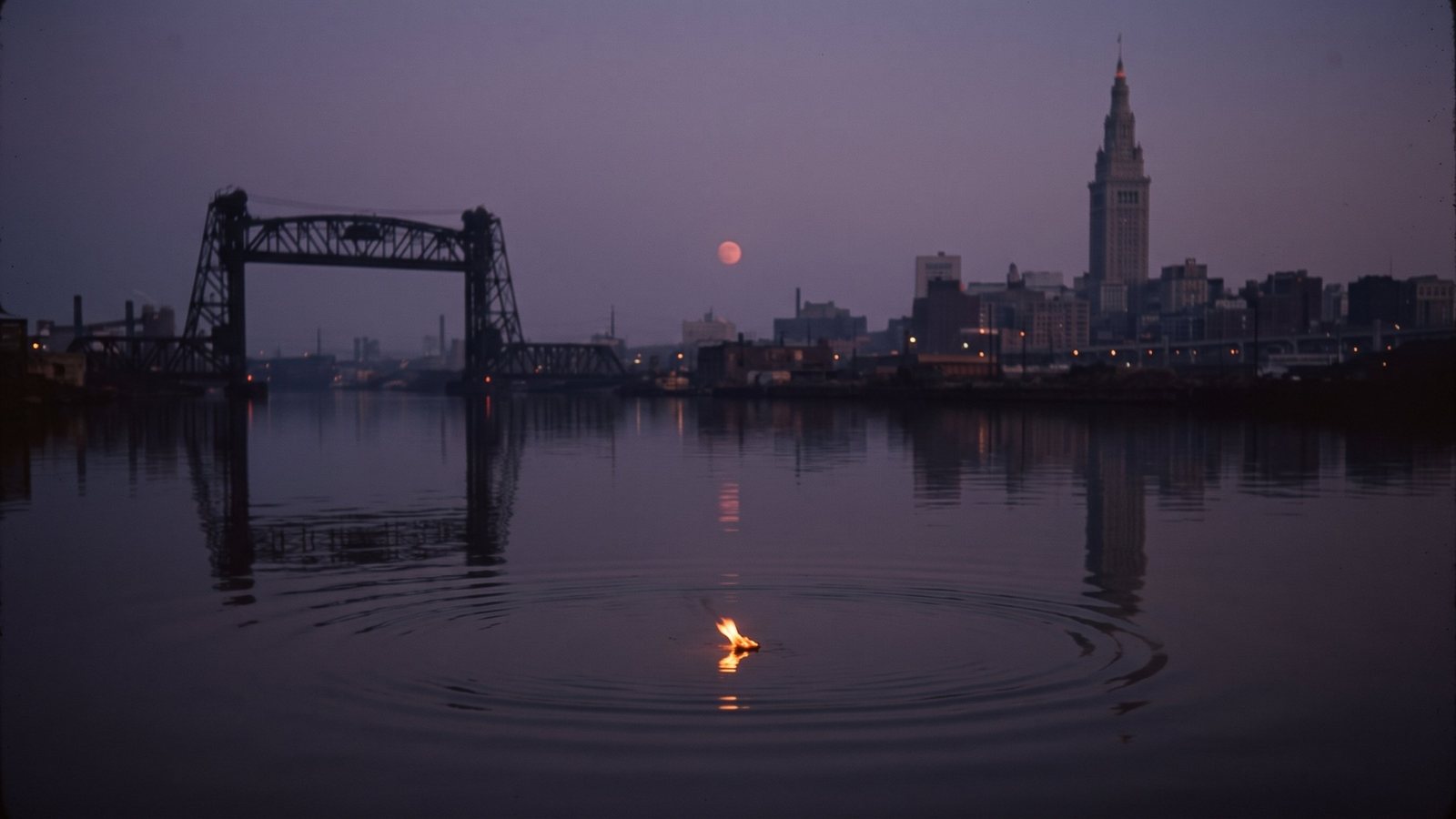
The River That Caught Fire
The Cuyahoga winds through Cleveland’s industrial Flats before emptying into Lake Erie. For a century, the steel mills, refineries and factories along its banks used it as a sewer. It was so thick with oil and debris that it caught fire at least 13 times, starting in 1868. One fire, in 1912, killed five people.
The fire everyone remembers came around noon on June 22, 1969, when sparks from a passing train apparently ignited an oil slick under a railroad bridge. Flames reached as high as five stories. A fireboat had it out in 20 to 30 minutes, and the damage, about $50,000 to two railroad bridges, drew little attention at the time. No one even took a picture.
The irony is that it was a small fire. The river’s worst blaze had come in 1952, when burning oil destroyed three tugboats, three buildings and a ship-repair yard, more than $1.3 million in damage. When Time magazine covered the 1969 fire that August, it illustrated the story with a dramatic photo of the 1952 fire instead.
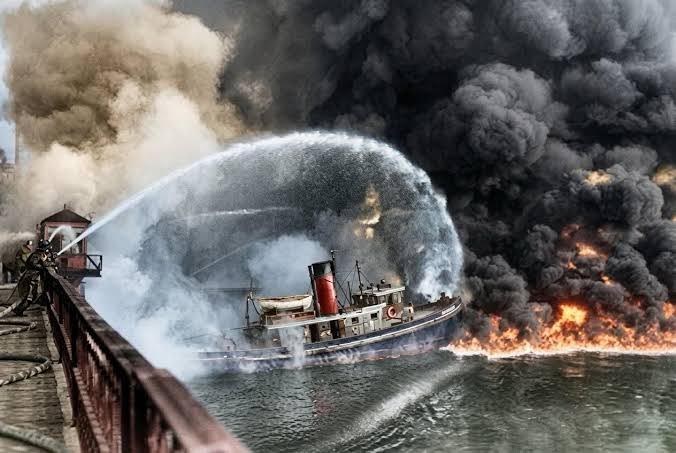
That photo, and the image of a river so dirty it could burn, struck a nerve. Within three years, the country had an Environmental Protection Agency (1970) and the Clean Water Act (1972). Randy Newman’s Sail Away, with “Burn On” on it, came out in May 1972, the same year Congress passed that law.
The Cuyahoga, Then and Now
- 13 fires between 1868 and 1969; the 1912 fire killed five people.
- 1952: the worst, at more than $1.3 million in damage.
- June 22, 1969: the most famous, put out in under half an hour, with no photos.
- 1970–72: the EPA is created and the Clean Water Act becomes law.
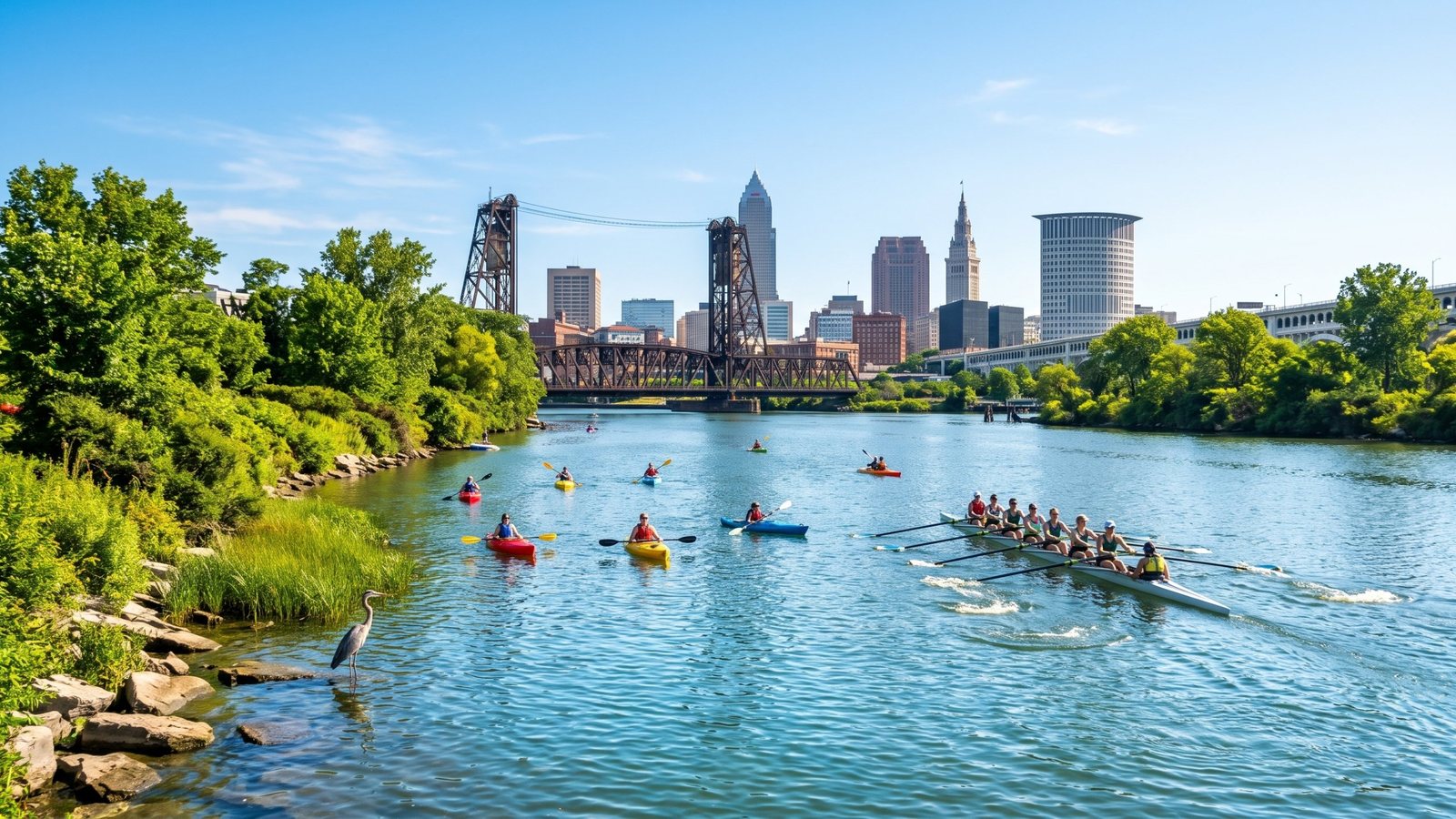
- Today: about 70 species of fish live in the river, and it’s busy with kayakers, rowers and paddleboarders. In 2019, Ohio’s EPA said some of its fish were safe to eat, though no more than once a month because of what remains in the sediment.
Why the Song Works
Newman never preaches. He sings “Burn On” as a tender, homesick ballad, the kind of thing a loyal Clevelander might hum about the old neighborhood, and lets the absurdity do the work. That’s why I gave the pictures a warm, nostalgic look instead of an apocalyptic one: the joke is that nobody in the song seems to think a burning river is all that unusual.
Clevelanders, to their credit, took the joke in stride. When director David S. Ward made the baseball comedy Major League (1989), set in Cleveland, he opened the film with “Burn On,” because it was the only song about Cleveland he knew. And the city that was once a punch line now hosts riverfront festivals, rowing regattas and a lot of people paddling a river that used to burn.
Sources & Further Reading
- National Geographic: The Cuyahoga River caught fire at least a dozen times, but no one cared until 1969
- History.com: How the Cuyahoga River fire led to the EPA and the Clean Water Act
- Ideastream: Fact-checking five myths of the 1969 fire on the Cuyahoga River
- Teaching Cleveland: The Cuyahoga River Fire
- Wikipedia: Sail Away (Randy Newman album)