First They Invented…
Every new invention arrives with a chorus of people who don’t see the point. Usually they have a perfectly reasonable excuse: no one to call, nothing to say, a horse that runs just fine. And for a while, they’re right. Then one day the world quietly finishes moving on without them.
So, with apologies to Pastor Martin Niemöller (more on him below), meet our reluctant friend. He’s been saying no since about 1450.









The Whole Thing, in One Place
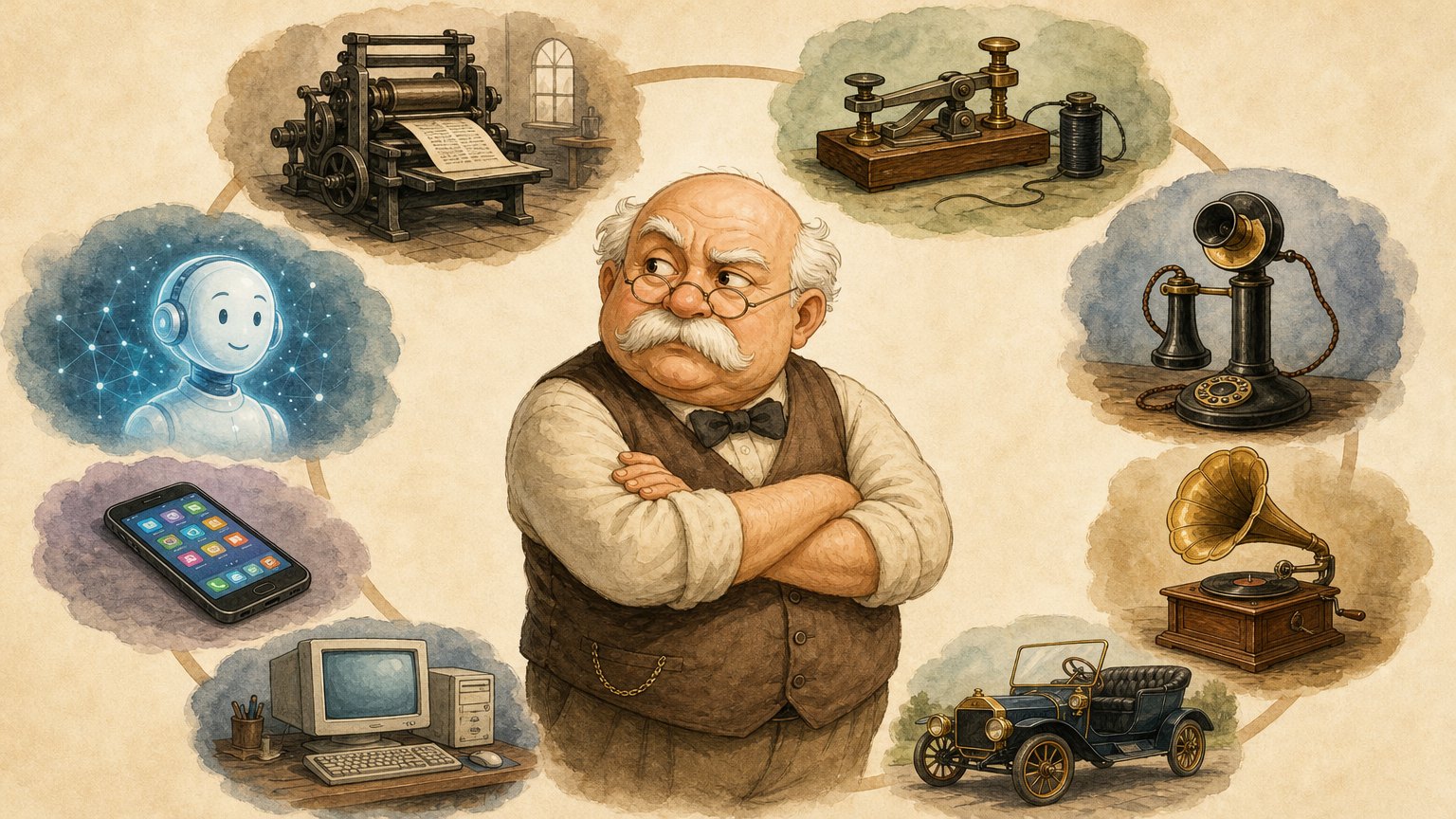
First they invented the printing press, and I didn’t buy a book—because I couldn’t read.
Then they strung the telegraph, and I didn’t send a wire—because I had nothing to say.
Then they invented the telephone, and I didn’t get one—because I had no one to call.
Then they brought out the gramophone, and I didn’t want one—because I had no records.
Then they built the automobile, and I didn’t need one—because my horse was just fine.
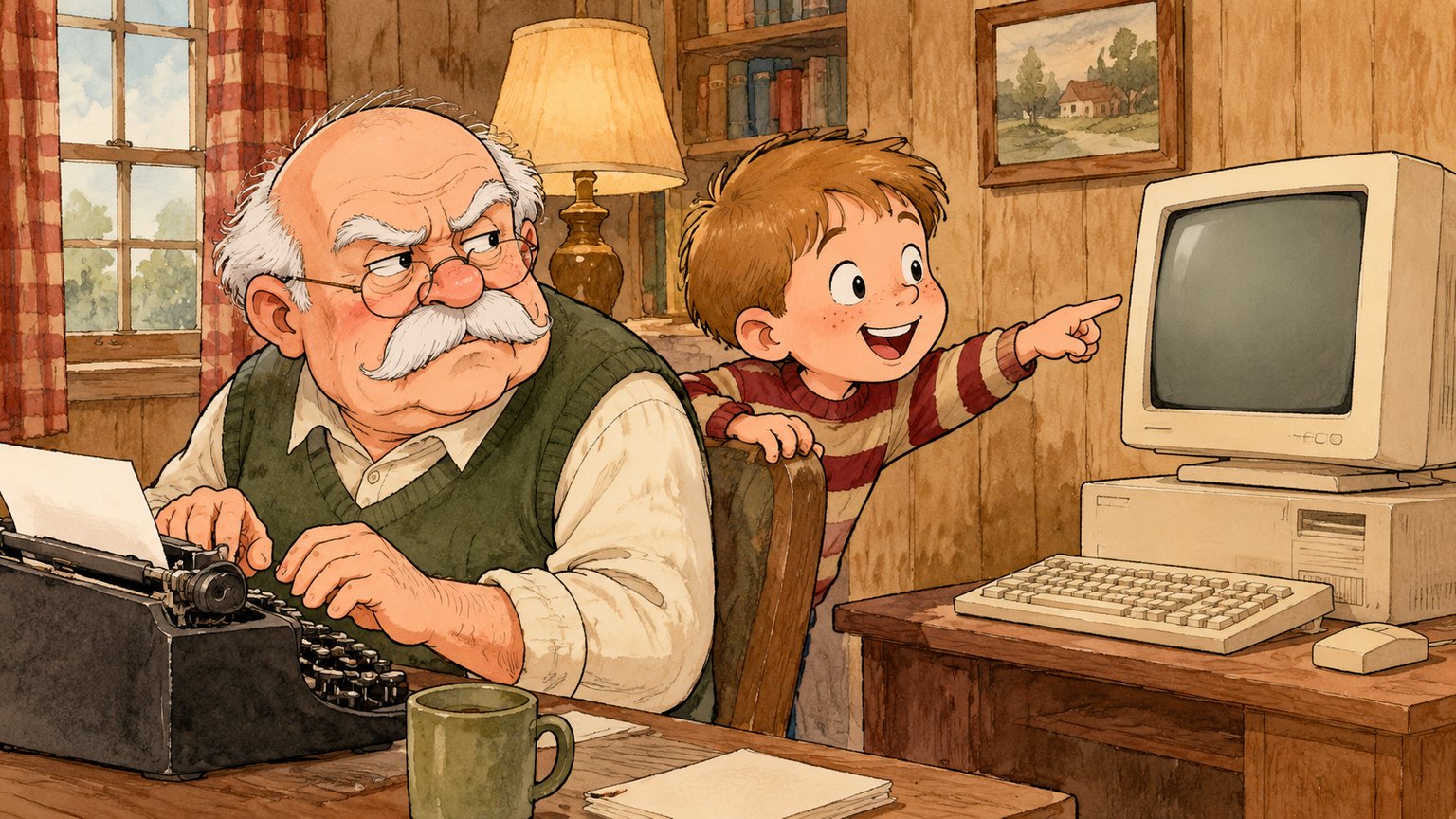
Then they sold the personal computer, and I passed—because I had a perfectly good typewriter.
Then they launched the internet, and I ignored it—because I didn’t have a computer.
Then they gave everyone a smartphone, and I said no—because my phone was on the kitchen wall.
Then they moved my bank, my doctor, my tickets and my driver’s license online, and there was no one left who had time to explain it to me.
Then they invented artificial intelligence—something patient enough to explain all of it, any hour of the day—but I had no way to ask.
About the Original
The famous refrain “First they came for…” comes from Martin Niemöller (1892–1984), a German Lutheran pastor who at first welcomed Hitler’s rise, then turned against the Nazis and spent 1937 to 1945 imprisoned, much of it in the Sachsenhausen and Dachau concentration camps. After the war he spoke often of his own failure to stand up for others, and his words became one of the best-known warnings against silence in the face of persecution. Its exact wording varies, because he gave it in speeches rather than writing it down as a poem.
Nothing about refusing a smartphone compares to what he witnessed. I borrowed only the rhythm, because it captures something true about how small, reasonable choices add up.
Putting a Toe in the Water
Our friend isn’t foolish. Each of his excuses made sense at the time, and plenty of people my age have felt exactly the same way about the latest gadget. The trouble is that every “no” makes the next “yes” a little harder, until the gap feels too wide to cross.
It isn’t. A few easy ways to start:
- Ask a grandchild. Most of them are delighted to be the expert for once, and they’re patient teachers when it’s Grandpa asking.
- Check your library or senior center. Many offer free classes or one-on-one help with phones, tablets and computers.
- Learn one thing at a time. A video call with family, or paying one bill online. Nobody needs to master everything at once.
- Then try asking an AI. Once you have a phone or computer, AI assistants will walk you through almost anything, step by step, as many times as you need, without ever sighing.
I wrote more about how every generation fears its new technology in “Before There Was AI, There Was Dad” on Flyover Country.