Free and Easy
For the past ten years, I’ve been collecting photos and stories of the bands, artists and venues that made the Midwest music scene, and posting them on my Midwest Rock & Roll History Facebook page, which now holds more than 1,800 photos. A handful of those bands deserve more than a photo and a caption, and this is the first of them.
Free and Easy is a band I’ve enjoyed and followed for years, and it’s personal, too. One of the early drummers in my own band, Bob & the Beachcombers, was Lauren McArthur who also played in Free and Easy, and so did my friend Jim Vanbuskirk, who joined on bass in 1974. Few local bands have lasted as long, changed as often, or stayed as good.
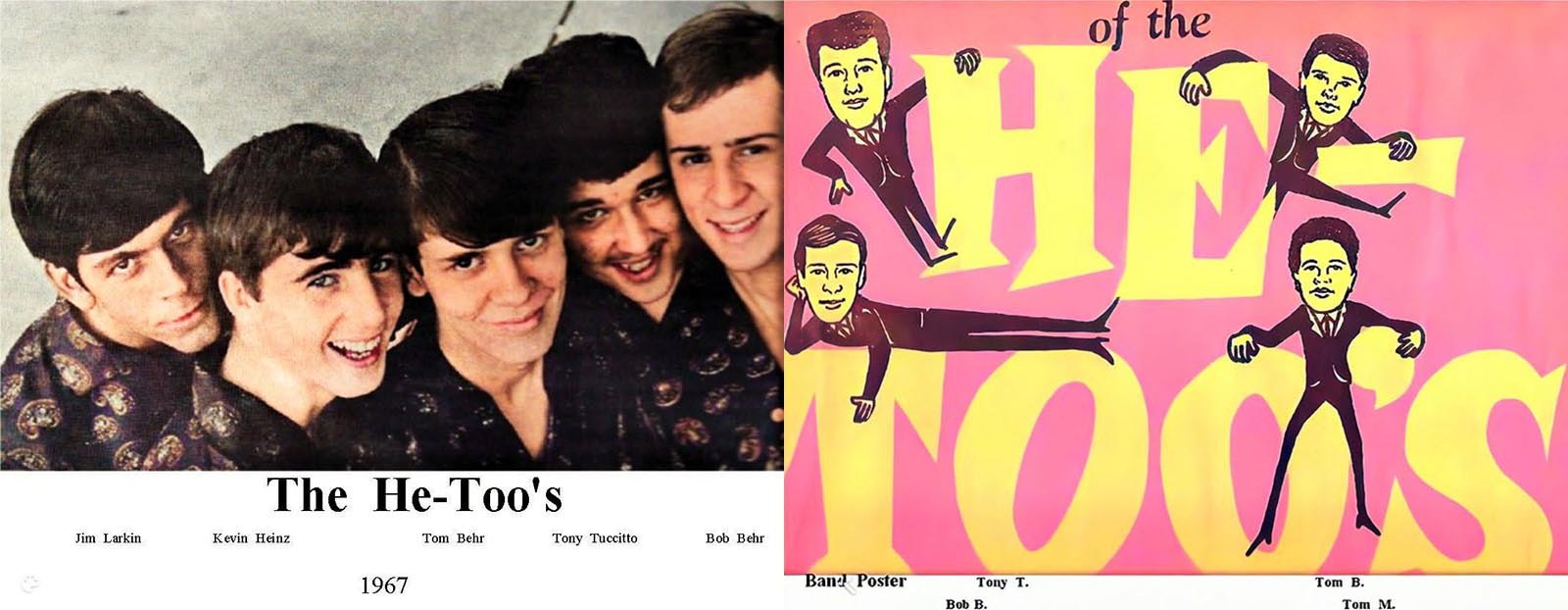
From the He-Too’s to Free and Easy
The story starts with a 1967 garage-era band called the He-Too’s and a young guitarist named Tom Behr, who would go on to front, manage and book the band for most of the next six decades. In September 1968, the He-Too’s added two trumpet players, traded their paisley for matching Edwardian suits, and changed their name to Free and Easy. The horns opened up a whole new set list, with songs by Blood, Sweat & Tears, Chicago and Buddy Miles.
The band made an early splash in Chicago, where a two-set gig at a downtown club called The Garage turned into a week-long stay. Back home, tired of traveling the five-state circuit, they signed with Ralph Ortiz at Alpha Productions in 1969, which could keep them busy closer to home at clubs like the Home Bar in Minneapolis and at high school and college dances. In 1970 they were recorded live at The Depot (today’s First Avenue) for an Alpha promotional album, Gathering at The Depot, contributing versions of “It’s For You” and Chicago’s “Wake Up Sunshine,” with vocals finished at Sound 80. Then, in early 1971, the band broke up.
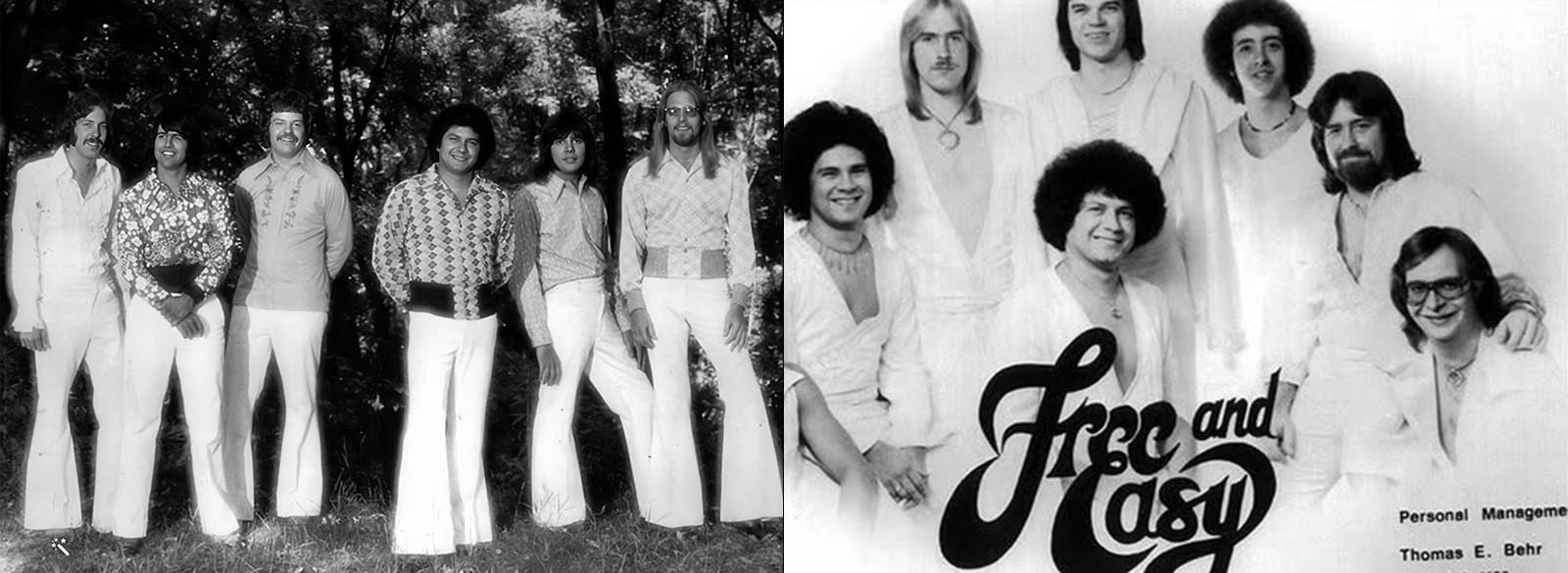
Raising the Bar
It didn’t stay broken up for long. In the fall of 1971, Tom Behr went to work as a booking agent for Alpha, assigned to get its bands into Twin Cities nightclubs. The club owners told him exactly what they wanted, and it wasn’t original music or loud heavy rock. They all pointed to one band as the model: the XL-5, a polished, well-groomed Top 40 dance band with great vocals.
So Tom went to see the XL-5 with a notebook in hand, took notes, and then set out to beat them. He hand-picked a new Free and Easy and raised the bar: three-part vocal harmonies, orchestrated horn parts called “solis,” more complex arrangements, and medleys stitching together songs by different bands. The group rehearsed three or four days a week in the back room of Alpha’s Burnsville office. The goal, in Tom’s words, was to be “funkier, cooler and classier” than the competition.
They also dug deeper than the radio. Alongside the expected R&B and Top 40, they learned album cuts other bands weren’t playing, often songs they first heard on records at house parties: Cold Blood’s “Down to the Bone,” Buddy Miles’s “Dreams,” Earth, Wind & Fire’s “Keep Your Head to the Sky,” and Edgar Winter’s “White Trash,” mixed in with Chicago, Sly and the Family Stone, Rufus, the Rascals, the Four Seasons and the Beach Boys.
The new band debuted in January 1972 at a Sunday afternoon showcase for club owners at the C.C. Tap in Minneapolis and walked away with a six-night-a-week job there. A month later, Joe Arigoni hired them for two weeks at the Jockey Lounge at Sibley Plaza in St. Paul. They stayed eighteen months as the house band. The lead singer had a fifty-foot microphone cord to work the crowd, and the horn players climbed up on the tables to play.
Demand grew so fast that by the fall of 1972, when Free and Easy were booked at other clubs like the new Crystal Mist at Maplewood Bowl, Tom created a sister band, Gangbusters, to cover the Jockey Lounge. In 1973, riding the Sha Na Na–fueled ’50s revival, the band added a retro set as “Ajax and the Bops,” then teamed up with singer Pat Fitzgerald’s Teen King and the Princes for a combined show that worked the five-state ballroom circuit. The high point: opening for Three Dog Night at the Met Center in Bloomington, in front of more than 10,000 people.
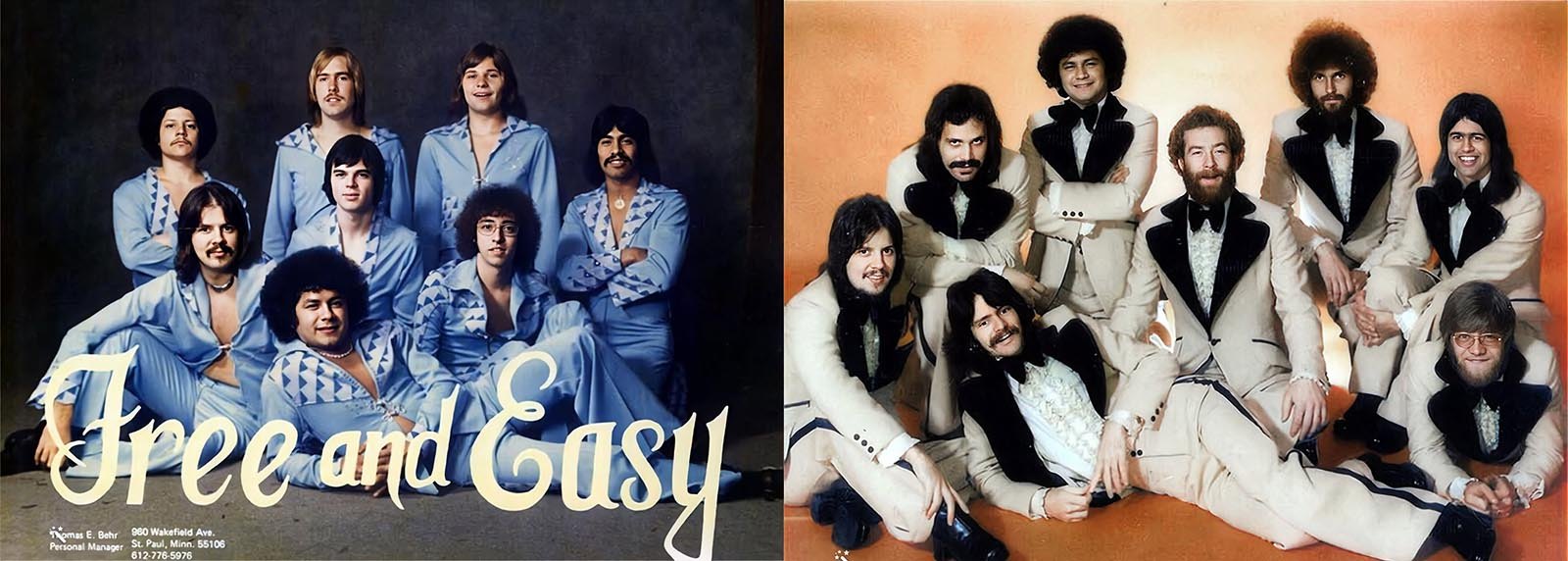
The Club Years
In February 1974, Free and Easy left the double bill and went back to the local clubs, with a new rhythm section and horns: Chuck Draper on drums, Jim Vanbuskirk on bass and Jack Carter on trumpet and trombone. With Tom booking them himself, they became a fixture across the metro:
- Jockey Lounge, St. Paul
- The Chain Link, St. Paul
- Pudge’s, St. Paul
- Times Square, Minneapolis
- Cascade 9, Minneapolis
- Bronco Bar, Chanhassen
- Burnsville Bowl, Burnsville
- Yellow Submarine, Hopkins
- Nicklow’s, Crystal
- The Hippogriff, St. Louis Park
- Doc Holliday’s, Shakopee
In 1976, the new Hippogriff club at Shelard Park in St. Louis Park became a regular home, along with popular Monday-night double bills with the Mystics or the Daisy Dillman Band. That August, Tom stepped off the stage to focus on managing the band and recording an album, and Jim Behringer took over on lead guitar.
This lineup started writing its own songs, and in October 1977 it recorded eleven originals at Creation Audio in Bloomington, finishing the instrumental tracks in two weeks, most in one or two takes. The tape found its way to RCA Records, and a deal looked close. But during the negotiations, Tom and James Walsh disagreed about the band’s direction. Tom kept the Free and Easy name, and the rest of the group became the James Walsh Gypsy Band. RCA released their album in 1978, and Walsh’s “Cuz It’s You Girl” got airplay around the country, reaching the Top 10 in St. Louis. But RCA’s own business troubles kept the record out of stores in the very markets playing it, and the discouraged band eventually broke up.
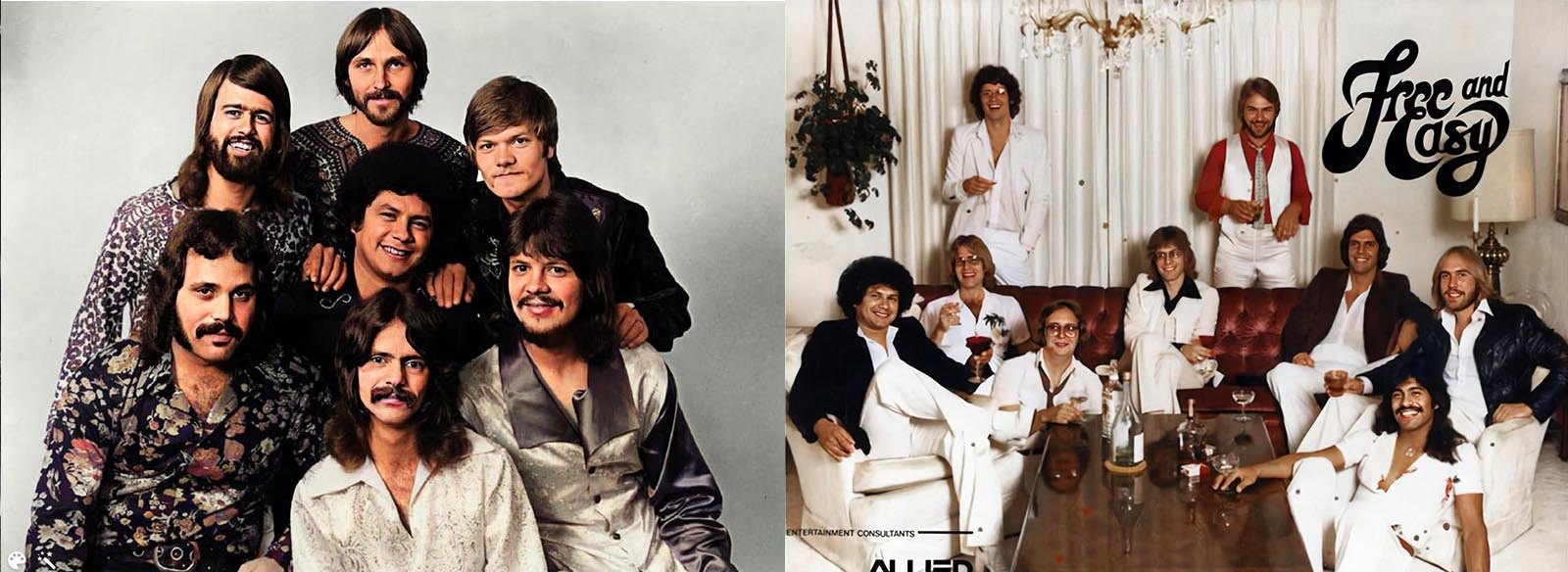
Disco, Westside and Nicklow’s
Then disco hit, and club owners started replacing live bands with DJs. Tom’s answer was characteristically clever: put together a new Free and Easy that played disco live, turn up the bass guitar and kick drum to match the records, and convince owners to alternate the band’s sets with the DJ. It worked. The new band opened at Hot Harry’s in St. Paul, and other disco clubs followed. Around the same time, Tom joined Ralph Ortiz and Mark Wroe of Good Music Agency to form Allied Artists, building and booking a stable of new R&B and disco bands.
In 1980, Tom took a job outside music in Chicago, and Junior Trejo led the band on under a new name, Westside. When Tom came home in 1987, he talked Tony Nicklow into opening the unused second-floor room at Nicklow’s in Crystal, and a reborn Free and Easy, with Joey Juliano and Lisa Keith on lead vocals, played there steadily for two years before calling it a day in 1989.
Hall of Famers, and Back on Stage
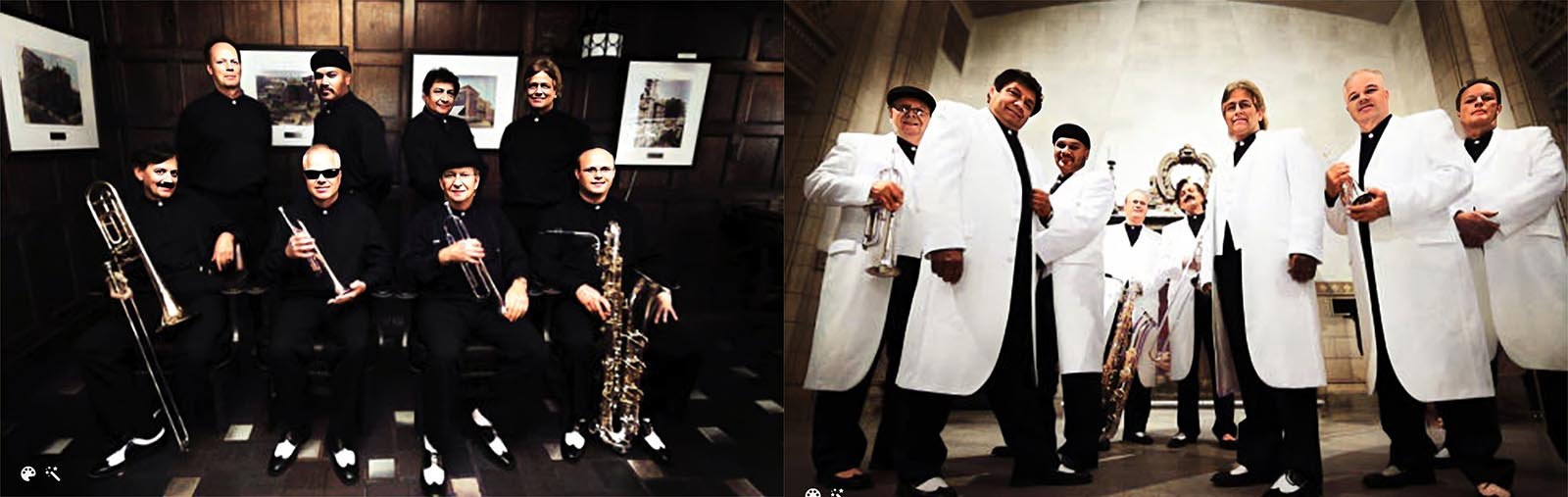
In 2008, Free and Easy were inducted into the Mid-America Music Hall of Fame (then known as the Minnesota Rock & Country Hall of Fame) at the Medina Ballroom. Two years later, in March 2010, the band came back for good, with several familiar faces from earlier eras and a new generation of the Rodriguez family on drums.
They’ve kept their R&B and funk sound alive at places like the Minnesota Music Café in St. Paul, Famous Dave’s, P.D. Pappy’s in Stillwater, the Minnesota State Fair and even the Xcel Energy Center during Minnesota Wild home games, plus plenty of corporate and private parties. And who books them? Tom Behr, still, more than half a century after the He-Too’s.
Sources & Further Reading
- Free and Easy band history, compiled from the band’s own published timeline
- Twin Cities Music Highlights: Mid-America Music Hall of Fame inductees, 2004–2012
- Free and Easy Band on Bandsintown