And what is Elon Musk's AI Grok?
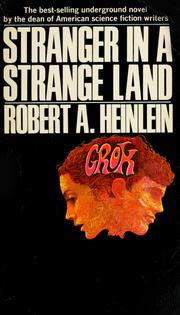
 The word "grok" comes from a 1961 science fiction novel entitled "Stranger in a Strange Land" written by the American author Robert A. Heinlein. It tells the story of Valentine Michael Smith, a human who comes to Earth in early adulthood after being born on the planet Mars and raised by Martians, and explores his interaction with and eventual transformation of Terran culture.As used in Robert A. Heinlein's novel "grok" means to understand something so thoroughly that the observer becomes a part of the observed - it is a merging, blending, or integration of identity and experience with the subject being grokked. In the book, grok begins with the literal meaning "to drink", but expands metaphorically to refer to a deep, intuitive, and empathetic comprehension - an understanding that is total in every way. The word "grok" comes from a 1961 science fiction novel entitled "Stranger in a Strange Land" written by the American author Robert A. Heinlein. It tells the story of Valentine Michael Smith, a human who comes to Earth in early adulthood after being born on the planet Mars and raised by Martians, and explores his interaction with and eventual transformation of Terran culture.As used in Robert A. Heinlein's novel "grok" means to understand something so thoroughly that the observer becomes a part of the observed - it is a merging, blending, or integration of identity and experience with the subject being grokked. In the book, grok begins with the literal meaning "to drink", but expands metaphorically to refer to a deep, intuitive, and empathetic comprehension - an understanding that is total in every way. |
 |
I first read this book while in high school and after learning about Elon Musk's AI program, listened to the audio book version and was reminded about how much I loved this story 50 years ago. It's amazing how prescient the story is in both the prediction of technological advancement and depiction of societal, political and cultural evolution. Here is a summary of the book (with help from Perplexity):
Valentine Michael Smith is the sole survivor of the first human expedition to Mars, raised entirely by Martians after all other crew members perished. When a second mission from Earth arrives about twenty-five years later, they bring Smith back to a post-World War III Earth ruled by a global federation. Earthly customs - particularly around sex, death, money, and religion - are confusing and often alarming to Smith, making him an outsider in his birth world. Smith is confined to a hospital for his own protection, but forms a pivotal connection with Nurse Gillian Boardman, becoming her "water brother" through a Martian ritual. Along with reporter Ben Caxton and the wise, eccentric author Jubal Harshaw, who becomes Smith's mentor, Smith escapes government control and begins exploring human society and its beliefs. As he gains understanding, Smith uses his Martian-learned psychic abilities - such as telepathy and telekinesis - and unique philosophy to influence those around him.
|
|
Smith eventually founds the Church of All Worlds, a religion that teaches Martian philosophy such as communal living, psychic abilities, and free love, paralleling the hippie movement of the 1960s. His new church attracts controversy and violence, particularly from other powerful religious groups, leading to Smith's eventual death at the hands of a mob. After death, Smith is depicted as becoming an archangel in the afterlife, suggesting his ideas transcend his physical fate. |
|
The novel is both a critique and a satire of mid-century American culture, tackling themes of nonconformity, sexuality, religion, and individual liberty. Its vocabulary, including the verb "grok", entered popular language, and the book became a countercultural icon, winning the Hugo Award for Best Novel in 1962. |
| Elon Musk named his AI technology and program "Grok" in reference to the verb grok from Robert Heinlein's classic novel "Stranger in a Strange Land". Musk has stated that this name reflects his vision for xAI's chatbot to achieve profound, intuitive understanding of human communication and the nature of the universe - not just to process data. Musk's Direct Explanation Musk has described his goal for Grok as developing an AI that "maximizes truth and objectivity", going beyond surface-level answers to display real understanding, echoing the sense of the word from Heinlein's novel. |
 |
| He wanted Grok's capabilities and naming to convey a deeper, integrated grasp of information and reasoning, making it more than just a question-and-answer system. The selection also signals Musk's intention for his AI to be both "rebellious" and "witty", aiming for interactions that feel more engaging and - according to Musk - more authentically insightful than its competitors. Literary and Philosophical Roots The term grok was coined by Heinlein to indicate complete empathy and identification withthe object of study or inquiry. Musk has cited Heinlein's invention of the word as inspiration for xAI's approach to artificial intelligence, seeking a system that strives to "understand the universe" as deeply as possible.In Practice Musk also rebranded his earlier "TruthGPT" project, which he called an "AI that seeks maximum truth," to Grok, emphasizing the AI's ability to "grok" or fundamentally comprehend complex issues. Grok's design intentionally reflects these origins, giving the AI a personality with humor and attitude, along with real-time web data access, to foster a feeling of deeper awareness andinsight than other mainstream chatbots.Thus, Musk named Grok to signal his ambition for an AI system centered on profound understanding and truth-seeking, derived from the unique meaning of the word in Heinlein's book and his philosophical vision for conversational artificial intelligence. |