Housewives vs. Psychic Teenagers
Two Binges, One Pattern
Judy and I just finished two Stephen King series back to back: The Institute and Carrie. Somewhere in the middle of the second one, I realized I’d seen this show before. Not the story. The shape.
Both come from the same corner of the streaming world. The Institute runs on MGM+, which Amazon owns. Carrie is a Prime Video original from horror director Mike Flanagan. Both take a King novel and pull it like taffy.
Carrie is the clearest case. King’s first novel is a short book, and Brian De Palma told the story in a single 1976 movie. Flanagan’s version runs eight episodes. One reviewer described it as stretching the novel’s mounting cruelty across an entire television season. The Institute didn’t even end when the book did: MGM+ renewed it for a second season before the first one finished, with new adventures for the escaped kids that King never wrote.
They weren’t bad. But they weren’t very good, either. The stories were full of plot holes, and when they weren’t predictable, they were just confusing and annoying. That’s almost the point. They were okay: competent, watchable, and built from the same parts.
Streaming Is the New Network TV
Those of us who grew up with three channels remember what network television felt like by the late 1970s. Every season brought a fresh crop of sitcoms that looked like last season’s, and an afternoon of game shows that differed mainly in the color of the set and the obnoxious emcee.
Streaming was supposed to fix that. For a few years it did. Now it’s rebuilding the same assembly line, only bigger and on demand.
Find a format that works, then stamp out copies. Change the city. Change the book. Change the cast. Keep everything else.
Netflix, Amazon, and the rest are all doing it, and because most of us reach these services through one bundle or another, they’re starting to blur into a single channel showing the same few shows in different costumes.
Housewives vs. Psychic Teenagers
On the surface, The Real Housewives and a Stephen King series about kids with mind powers have nothing in common. Look at how they’re built, though, and they’re the same machine.
| The Housewives Formula | The Psychic Teenager Formula | |
|---|---|---|
| The pitch | Wealthy women, one city, lots of wine | Gifted kids, one sinister institution, lots of nosebleeds |
| What changes | The city: Orange County, New York, Atlanta, Beverly Hills… | The source: The Institute, Carrie, Stranger Things, Firestarter, Invasion, Doctor Sleep… |
| What never changes | The feud, the trip, the dinner party that goes wrong | The lab, the bully, the scene where a power finally explodes |
| The cliffhanger | Who’s not speaking to whom | Who survived the explosion |
| The sequel | Next city | Next season, past where the book or movie ended |
| The spinoff | A cast member gets her own show | An animated prequel |
I’m not the first to notice the overlap. Years ago, when SyFy launched a reality show about a family of psychics, an AV Club critic called it the network’s version of the “Look at all of the crazy housewives!” shows on Bravo. Psychic TV has its own long history too: A&E’s Psychic Kids: Children of the Paranormal ran from 2008 to 2010, and Lifetime’s America’s Psychic Challenge had contestants competing for $100,000 and the title of “America’s #1 Psychic.”
So here’s my modest proposal, free to any streamer that wants it:
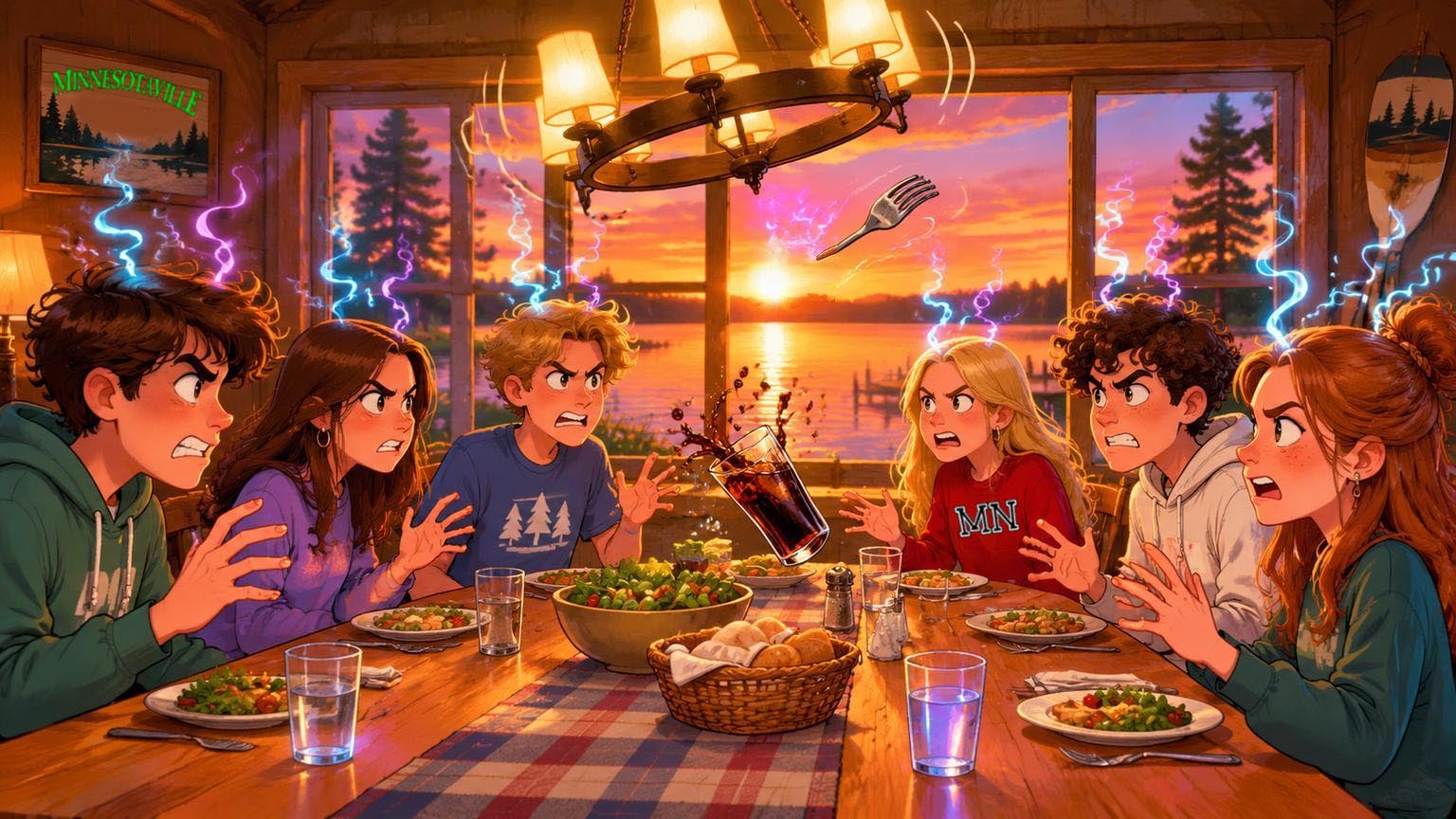
Crazy Psychics of Minneapolis
Six local psychics share a lake home on Minnetonka. They predict each other’s betrayals, but never their own. Season 2 moves to Houston. Season 3, Atlanta. The reunion special is hosted by a teenager who can set things on fire with her mind.
You already know how it ends, and so do they.
The dating shows run on the same engine: Love Is Blind, Love Island and Love on the Spectrum each spawn sister versions abroad and new season after new season. Even the gentlest of them, Love on the Spectrum, has been remade for a second country.
Nobody has worked a theme harder than ABC. The Bachelor has been on the air for more than 20 years, joined along the way by The Bachelorette and Bachelor in Paradise. When the younger contestants wore thin, ABC simply aged the cast: The Golden Bachelor broke the franchise’s ratings records in 2023, and The Golden Bachelorette followed in 2024.
Even that well has a bottom. Shows like Love Is Blind and Love Island knocked the franchise from the top. ABC pulled a whole season of The Bachelorette days before its March 2026 premiere, then left The Bachelor and every spinoff off its fall 2026 schedule.
But a franchise like this doesn’t die; it regroups. The Bachelor returns for its 30th season on Sunday, March 21, 2027, nearly two years after the last one ended, with a Washington Commanders quarterback as the new leading man. Bachelor in Paradise is scheduled to follow next summer. Thirty seasons in, the roses keep coming.
The Ending That Isn’t
Then there’s Stranger Things, which Judy and I gave up on somewhere along the way. Netflix’s biggest original finally wrapped with a New Year’s Eve finale, and the Duffer Brothers called it a complete story.
It lasted about four months. The animated spinoff Stranger Things: Tales From ’85 premiered April 23, 2026, set between Seasons 2 and 3 of the original, and a second season of the cartoon is due this fall.
Then, on Nov. 6, Netflix announced Other Worlds: A Stranger Things Adventure, a live-action prequel set in Marion, Nevada, in 1955 and due in 2028. It comes from the Duffer Brothers and original series writer Kate Trefry. Counting the stage play The First Shadow, it’s the franchise’s third spinoff. New decade, new town, new cast, same brand.
That’s the template in its purest form. The story ends; the brand doesn’t. A good ending used to be the reward for sticking with a show. Now it’s just an intermission.
Why They Keep Doing It
The reason isn’t a mystery. A familiar name is easier to sell than a new idea. Stephen King’s name on the poster does half the marketing before anyone sees a frame, and a show with a fan base already in place is a safer bet than a stranger.
The numbers reward the strategy. The Institute gave MGM+ its best premiere ever, so a second season was never in doubt, even though many critics were lukewarm about the first.
Reality formats are cheaper still. There are no novelists to pay and no special effects; a new city is just a new set of houses. When a template works in one place, the business logic says copy it everywhere until it stops working.
None of that makes a streamer evil. It makes it a TV network, the same kind that gave us Three’s Company and its look-alikes. We left network TV partly to get away from that. It followed us.
Who Shot J.R.? The Original Cash Grab
Network executives were milking hits long before streaming. Dallas’s 1979–80 season was supposed to end with patriarch Jock Ewing on trial. Then CBS, thrilled with the ratings, ordered extra episodes (accounts say two or four), and the writers needed a new ending fast. On March 21, 1980, they had J.R. gunned down in his office, before they’d even settled on who pulled the trigger.
America waited eight months. An actors strike pushed the fall season into November, and the answer didn’t come until the season’s fourth episode, “Who Done It,” on Nov. 21, 1980. About 83 million Americans, 76 percent of the TV audience, tuned in. Its 53.3 Nielsen rating was the highest for any episode in U.S. history until the M*A*S*H finale in 1983.
A network squeezing more out of a hit, writers improvising on deadline, a cliffhanger built to bring viewers back: Netflix didn’t invent this playbook. CBS did.
By the Numbers
Somebody’s Still Trying
There are exceptions. Of the big streamers, Apple TV seems most willing to bet on serious, grown-up drama. HBO still makes prestige TV too, but Apple’s lineup is where I keep finding shows that trust the audience.
Dark Matter is a good example, and an honest one, because it complicates my argument. It’s also a book adaptation, and it also got a second season past the book: ten episodes that ran from Aug. 28 to Oct. 30, 2026. The difference is who’s holding the pen. Blake Crouch, who wrote the novel, is the showrunner, and he called Season 2 the closest thing to a true sequel his book will ever get. That’s an author continuing his own story, not a studio stretching someone else’s. The problem was never turning books into television. The problem is stretching them until the seams show.
Apple doesn’t bat a thousand either. The Gorge, its 2025 monster movie, was the kind of thing that makes you check whether you clicked the wrong button. But a miss from a studio that’s swinging is different from a hit off the assembly line.
The Remote Is Still Ours
Network TV in the ’70s finally changed when viewers drifted away and cable gave them somewhere else to go. Streaming’s audience can do the same thing faster: one click cancels a subscription.
Until then, Judy and I will keep watching, a little more selectively. If a show is based on a short novel and runs three seasons, we’ll know what we’re in for. And if Crazy Psychics of Minneapolis ever shows up in the queue, remember: you read it here first.
Sources
- Sortiraparis: Prime Video’s Carrie premieres Oct. 7, 2026 · The Playlist: Carrie trailer
- Bloody Disgusting: MGM+ renews The Institute · Advanced Television: MGM+’s best premiere ever · JoBlo: middling reviews
- AV Club: Mary Knows Best review · Wikipedia: America’s Psychic Challenge · Psychic Kids show listing
- TheWrap: Golden Bachelor ratings · Deseret News: the franchise’s shaky future · AV Club: ABC’s Bachelor-free fall lineup
- Laughing Place: The Bachelor Season 30 premiere · ARY News: Season 30 announcement · Reality TV World: Bachelor in Paradise returns
- Bustle: Stranger Things spinoffs · Social Life: franchise timeline · What’s on Netflix: Other Worlds · Dread Central: the third spinoff
- SheKnows Soaps: CBS extended Dallas · NZ Herald: who shot J.R. · TV Insider: 83 million viewers · Wikipedia: “Who Done It”
- MacTech: Dark Matter Season 2 · Gizmodo: Dark Matter Season 2 review