Every American citizen respects and honors the life and teachings of Dr. Reverend Martin Luther
King Jr.
As we approach the end of Black History Month and celebrate Martin Luther King Jr.'s birthday in
January, this might be a good time to revisit the beliefs and teachings of Reverend King as it might
pertain to the riots, deaths, destruction of property, and often times violent protests experienced
in Minneapolis during "Operation Metro Surge" over the last few months. The United States Constitution absolutely and completely protects the right and perhaps even the obligation to peacefully protest against laws, policies, or government activities they disagree with.
Protestors attempt to claim the higher moral ground, along with Minneapolis Mayor Jacob
Frey and Governor Tim Walz who both encourage them, even as agitators physically assault
ICE agents, throw rocks and fireworks at them, block streets, starts fires, damage
businesses and hotels, attack official vehicles, and incite a violent response from law
enforcement agents.
From Perplexity AI:
Martin Luther King Jr. would likely condemn the violent acts - fireworks, rocks,
assaults, arson, and property destruction - during the Operation Metro Surge protests as
a dangerous departure from disciplined nonviolence that undermines the moral authority
of the movement.
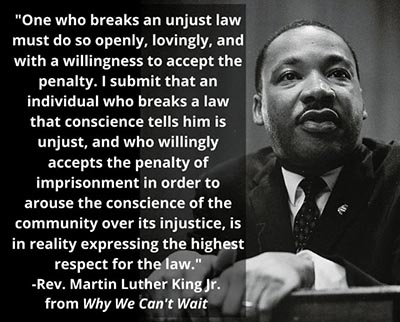
In "Letter from Birmingham Jail," Martin Luther King Jr. presents nonviolent protest as
a carefully planned and disciplined strategy rather than a spontaneous outburst. He
outlines four basic steps for any campaign: collecting facts to confirm that injustice
exists, attempting negotiation, engaging in self-purification, and finally moving to
direct action. This structure shows that marches, sit-ins, and boycotts are not the
first resort; they come only after good-faith efforts to resolve the conflict through
dialogue have failed.
|
|
|
 |
|
King describes the goal of direct action as creating a "constructive, nonviolent
tension" that forces a community to confront issues it has tried to ignore. By
disrupting "business as usual" through peaceful demonstrations, protesters bring hidden
injustices into the open and make it impossible for authorities to continue postponing
change. Central to this tactic is the willingness of protesters to "present our very
bodies" and to accept suffering - arrests, beatings, jail - without retaliation. That
readiness to endure hardship appeals to the conscience of the wider public and exposes
the moral bankruptcy of unjust laws and practices.
For King, these tactics also provide a vital channel for the anger and frustration of
oppressed people. He argues that if their "repressed emotions" are not expressed through
organized, nonviolent actions like marches, prayer vigils, sit-ins, and freedom rides,
they are likely to erupt in destructive violence. Nonviolent protest, then, is both a
moral method and a practical one: it allows people to demand justice forcefully while
preserving their own dignity and reducing the risk of chaotic, uncontrolled conflict.
How are authorized law enforcement agents expected to respond when protesters throw
fireworks, ice and rocks at them, have bullhorns, whistles and automobile horns blown in
their ears, and cars driven towards them in attempts to impede or block law enforcement
actions? Or when they're called "Nazis" or as Governor Tim Walz prefers, "gestapo"?
|
There were protests, demonstrations, marches and riots during the '60s against
institutionalized racism and the Vietnam War, issues far more serious than the removal of
a few unvetted illegal immigrants which often included convicted criminals, rapists, child
molesters, drug dealers, possible terrorists and human traffickers. As a culture and as a
society, America tried to learn from the ministry and teachings of Reverend Martin Luther
King Jr. and yet, sixty years later we are less civilized, less respectful, less
compassionate and more willing than ever to insult, threaten and even physically attack those we disagree
with.
From Perplexity AI:
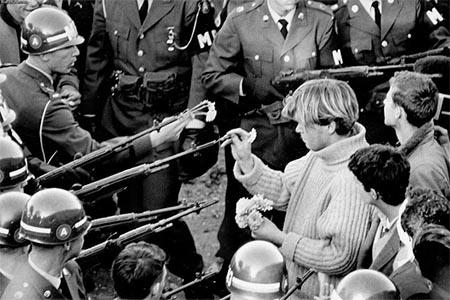
The "Flower Power" photograph significantly shaped antiwar protests by popularizing
nonviolent symbolism and theatrical tactics that de-escalated confrontations while
amplifying media impact. The image of flowers in rifle barrels - captured by Bernie Boston
during the 1967 March on the Pentagon - inspired protesters to use flowers, music, and
props like toys or candy as "weapons" of peace, turning rallies into spectacles of love
rather than anger. Allen Ginsberg, who coined "flower power" in 1965, aimed to counter
violence (like threats from pro-war Hells Angels) by flooding front lines with blooms, a
tactic the photo made iconic and widely imitated at later Vietnam protests.
|
|
|
 |
|
From Perplexity AI:
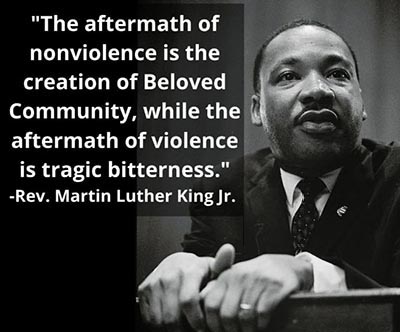
King consistently taught that nonviolence rejects physical harm to opponents and even
minimizes damage to property, viewing both as counterproductive. He wrote in his 1964
Nobel lecture: "Violence as a way of achieving racial justice is both impractical and
immoral," creating a "descending spiral ending in destruction for all" rather than
conversion or reconciliation. Assaulting ICE agents or officers physically would violate
his principle that protesters must "accept suffering without retaliation," using their
bodies only to appeal to conscience, not to inflict injury. He distinguished riots from
nonviolent direct action, calling riots the "language of the unheard" born of despair,
but insisted they must be redirected into organized, peaceful channels like marches and
sit-ins. Throwing rocks, fireworks, or attacking vehicles fits the riot pattern he
criticized - lashing out at persons and property - which he said alienates allies,
justifies crackdowns, and delays justice.
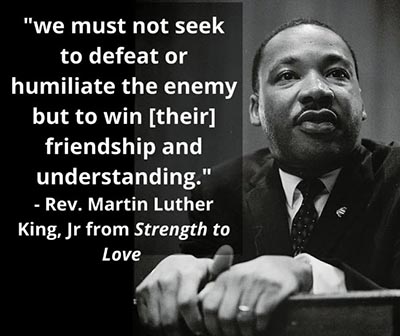
King wrote that nonviolent resisters "will not obey unjust laws or submit to unjust
practices" and will do so "peacefully, openly, cheerfully because our aim is to
persuade." Willingness to suffer - arrest, beatings, even death - was meant to dramatize
injustice and move the broader public and political institutions to change.
|
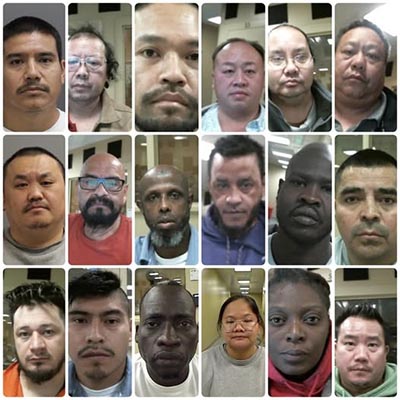
And yet, in 2026 Minnesota politicians, social media influencers, cable news broadcasters,
the Minnesota StarTribune, New York Times, late night comedians and legacy news media
pundits hold up the violent protesters as folk heroes and protectors of innocent victims
and defenders of the Constitution and the rule of law.
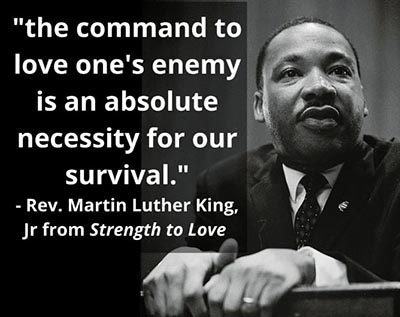
Dr. King wrote:
"I have consistently preached that nonviolence demands that the means we use must be as
pure as the ends we seek.":
For tactics of protest, "Letter from Birmingham Jail" gives a really clear blueprint of
how King thought nonviolent action should be organized and carried out.
King lays out a four-step method for any nonviolent campaign:
"In any nonviolent campaign there are four basic steps: collection of the facts to
determine whether injustices are alive; negotiation; self-purification; and direct
action."
|
|
|
|
|
This shows he sees protest as planned and disciplined, not spontaneous chaos.
Direct action and 'creative tension'
He explains why sit-ins, marches, and other actions are necessary:
"Nonviolent direct action seeks to create such a crisis and foster such a tension that a
community that has constantly refused to negotiate is forced to confront the issue."
The goal is to
"create a situation so crisis packed that it will inevitably open the door to
negotiation."
Unfortunately, the goal for the mainstream media and politicians is to continue to stoke and
maintain an ongoing crisis that will keep people watching while ratcheting up tempers and
emotions, in order to generate the maximum amount of ad revenue and political
contributions, all the while ignoring the success that the "Operation Metro Surge" had in
apprehending more than 4,000 criminal illegal aliens from our state and making Minneapolis
and Minnesota safer for all of the citizens, immigrants, families and children who reside
in our great state.
It is tragic and sad that the life and teachings of Dr. Reverend Martin Luther King Jr. no
longer have any meaning or value to so many citizens in Minnesota or people in the news and social media and within state
and city governance.
|
|
