End of the Line
As an older musician, husband, father and grandfather, I’m enjoying life as much as I ever have, maybe more. I’m healthy, in better shape than many of my contemporaries, and my spiritual outlook has taken away most of my fear of death. Oddly enough, that’s exactly what frees me to think and talk about the later chapters of life.
A few songs have helped me do that. Brian Wilson’s “I Just Wasn’t Made for These Times” is one, and Alan Jackson’s “The Older I Get” is another. A third has stayed with me for more than thirty-five years: “End of the Line” by the Traveling Wilburys.
The Accidental Supergroup
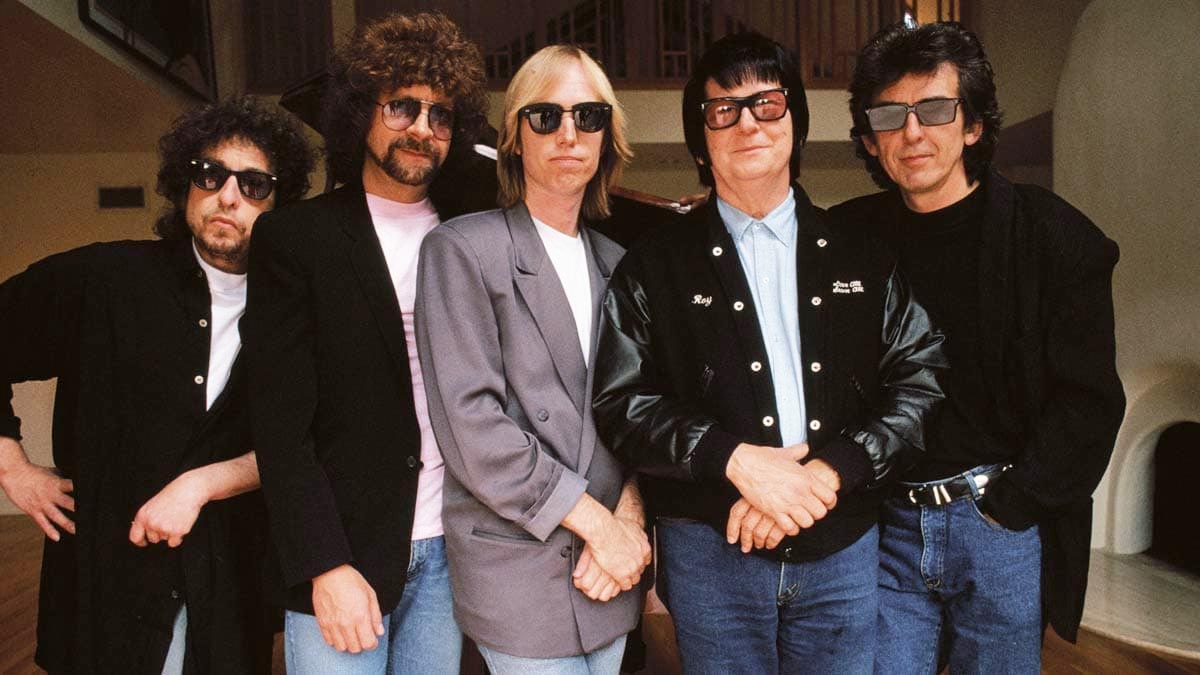
The Traveling Wilburys came together almost by accident in the spring of 1988. George Harrison needed one more song for the B-side of a single. He was working with Jeff Lynne, who was also producing Roy Orbison, and before long Tom Petty and Bob Dylan were in on it too. They recorded at Dylan’s home studio in his garage, where Harrison spotted a box labeled “Handle with Care.” That became the song’s title.
The result was far too good for a B-side, so the five legends decided to make a whole album. Traveling Wilburys Vol. 1 came out that fall. Among all those famous voices, Orbison’s stood apart: listen to the way his soaring solo cuts through the easygoing vocals on “Handle with Care.”
An Empty Rocking Chair
Roy Orbison died just seven weeks after the album came out. Soon after, the four surviving Wilburys filmed a video for “End of the Line,” riding together in an old railroad car, guitars in hand.
The Traveling Wilburys, “End of the Line” (official video)
When Orbison’s voice comes in, the camera turns to an empty rocking chair with his guitar resting in it, gently rocking with the train. Near the end, a framed photograph of Roy appears.
The song was never meant as a goodbye. His friends made it one.
That’s what moves me most. “End of the Line” was already recorded and released before Orbison died. The warmth in his voice wasn’t a farewell; it was just Roy, singing about getting through life with good humor. The goodbye came afterward, from the way his friends chose to honor him, and it gave the song a meaning none of them had planned.
The Lines I Carry With Me
I won’t reprint the lyrics here, but a few lines have stayed with me, and they mean more at 74 than they did at 37.
He pictures a day, years from now, when someone remembers him and wonders what ever became of him.
My parents both passed away nearly fifty years ago, and I’ve lost many friends and relatives since. I believe in eternal life, and I often wonder when I’ll see them again. I also wonder, a little, what people will think of me someday: what I made, what I did, and where I’ve gone.
He’s thankful for the plain gift of being alive, and satisfied with the ride, with company or without it.
That’s where I am today. I’m happier, busier, more optimistic and more content than I ever imagined I’d be at this age, and thankful to have my wife, Judy, along for the ride. Not many people I know have been so fortunate.
Growing older is no reason to fall silent. Let other people live their own lives, and when in doubt, forgive.
I’ve got some gray, but I’ve still got plenty to say and share. I’m still learning every day, from family, friends, and yes, even from my conversations with an AI, about better ways to live and let live, to say what I mean, to challenge and criticize when I have to, and still find a way to love and forgive.
Read the full lyrics to “End of the Line”
is still a long way down the track.
I’m having far too much fun to get off this train.